

Last updated: April 23, 2026
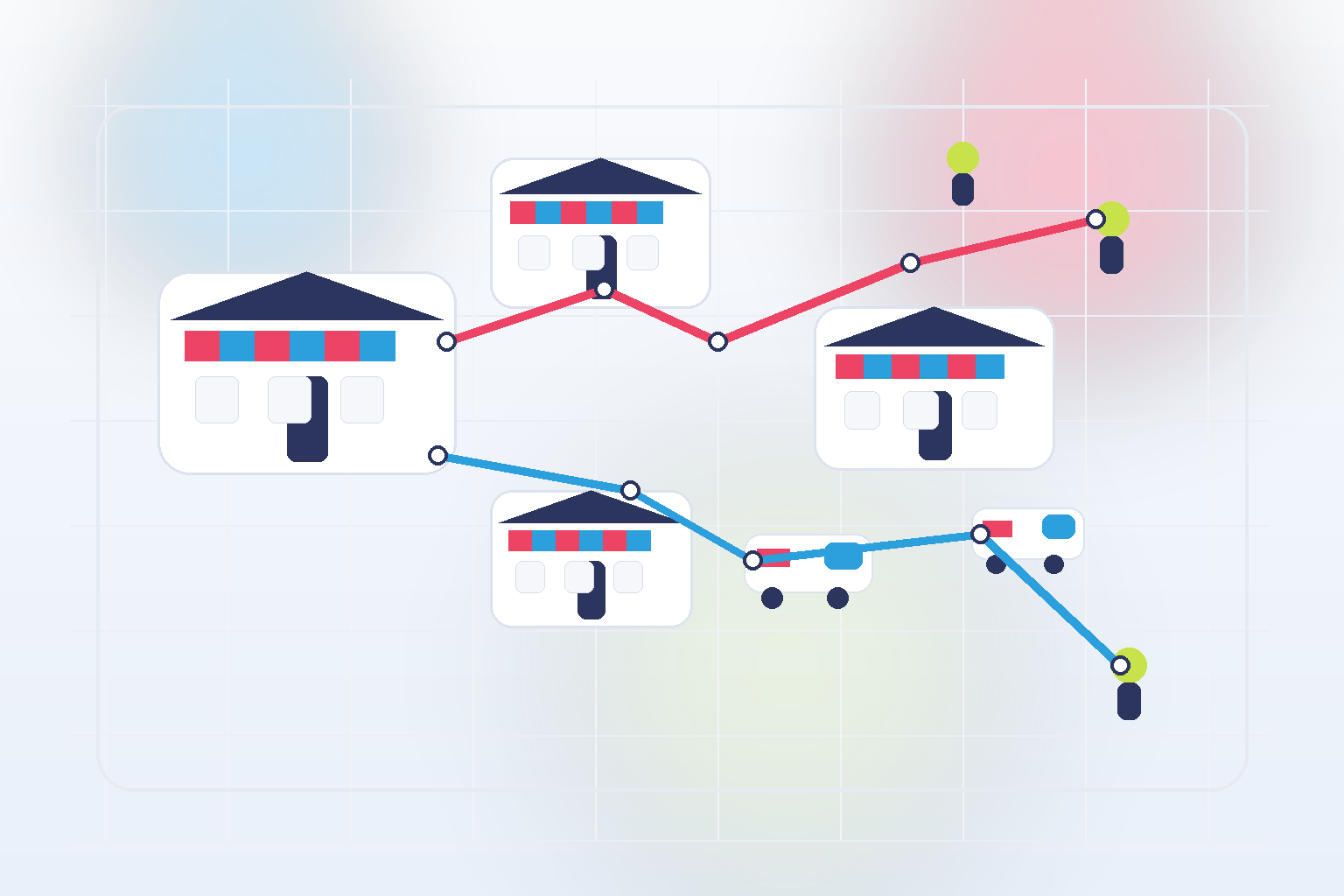
Retailers do not need to build a brand-new delivery network from zero to operate like a modern last-mile business. In most cases, the physical network already exists: stores, local inventory, dense customer zones, drivers or carrier partners, and teams that already understand the local market. The missing layer is not another store. The missing layer is delivery orchestration.
That is where many retail operations break down. They try to solve an execution problem with more manual coordination, more spreadsheets, or more chat threads. But once a store starts acting as both a selling point and a delivery node, every small miss turns into a real operating cost: missed windows, duplicate mileage, weak ETA promises, and support teams chasing the field for answers.
Quick summary
- The store-as-hub model is already being validated by major retailers.
- Israeli retail chains have a natural structural advantage: proximity, dense demand, and existing store footprints.
- The operating question is not “Do we have enough stores?” It is “Can we orchestrate delivery from them reliably?”
- Good retail delivery management combines planning, dispatch, tracking, communication, and proof of delivery into one execution layer.
What changed in retail delivery
In April 2026, Pymnts reported that Target is expanding its next-day delivery model to 100 stores across 50 markets through Shipt. That matters because it confirms an operational shift: stores are no longer only fulfillment-adjacent assets. They are becoming active delivery nodes.
At the same time, Bringg’s 2026 Delivery Experience Study found that 72% of shoppers consider on-time arrival essential to a great delivery experience, and 61% abandon carts when delivery options are not flexible. Delivery is not just a post-purchase detail anymore. It influences conversion, loyalty, and repeat buying.
Why this matters even more in Israel
Israeli retail chains already have many of the physical conditions needed to run direct-from-store delivery well: short distances, urban density, high delivery expectations, and store footprints that sit close to the customer. That means the opportunity is real.
But physical proximity is not the same thing as operational readiness.
As soon as a store becomes part of the delivery network, the operation inherits a new stack of constraints:
- inventory and order cutoffs by location
- driver and vehicle capacity
- promised delivery windows
- real-time delays, cancellations, and inserts
- customer communication and delivery proof
This is why “store network” and “delivery network” are not the same thing. The bridge between them is execution logic.
What breaks first when stores become hubs
Most chains do not initially say, “We need delivery orchestration.” They feel the symptoms first:
- orders are sent from the wrong store because no one is optimizing by capacity and SLA together
- two vehicles cover overlapping geography because dispatch is still manual
- customers receive wide delivery windows because teams cannot defend a tighter ETA
- support teams call stores and drivers to understand what happened in the field
- operations managers spend the day rearranging execution instead of managing exceptions
This is the core distinction PickPack keeps coming back to: delivery orchestration, not just route planning. A route is part of the answer, but it is not the whole operating system.
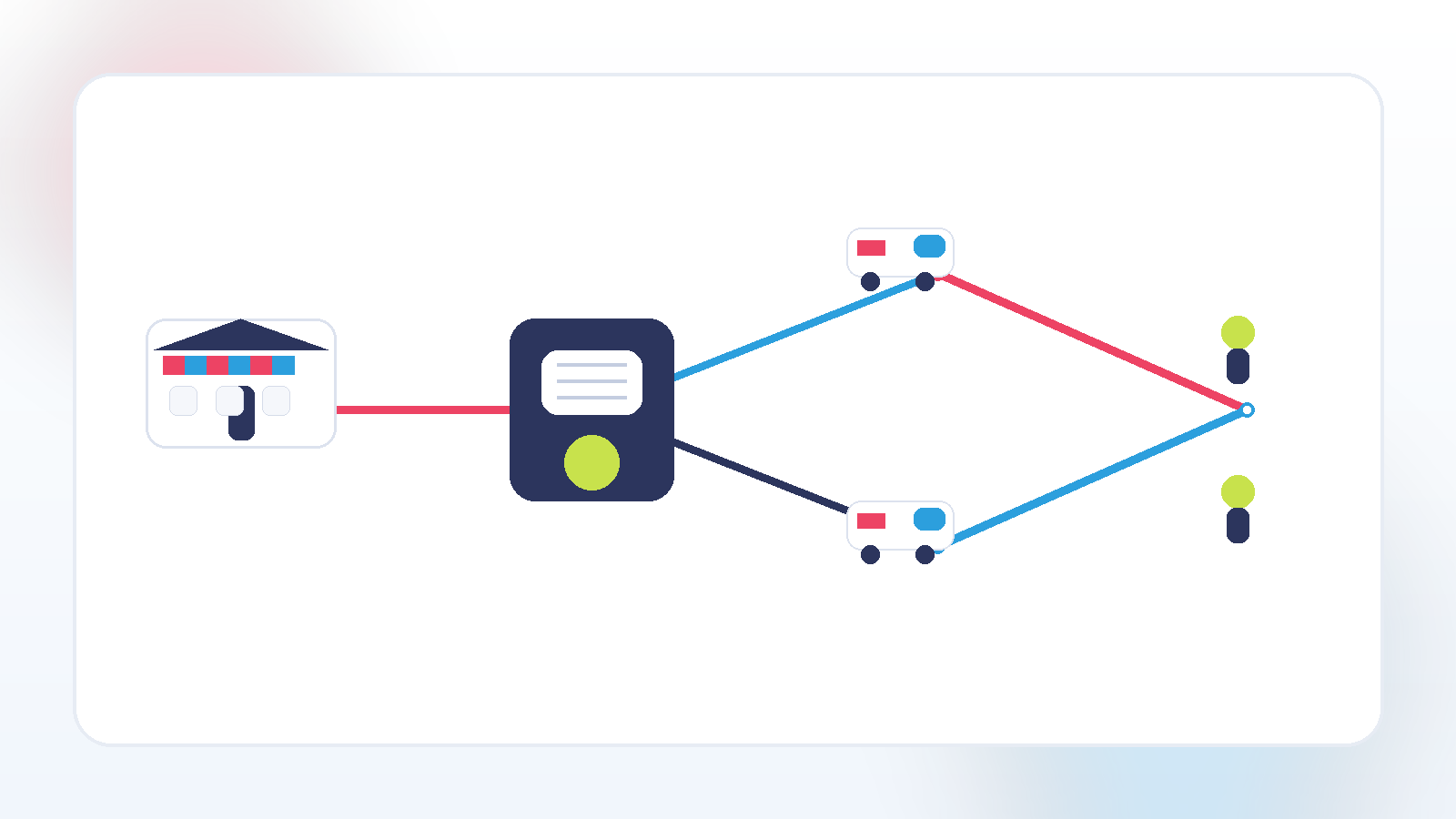
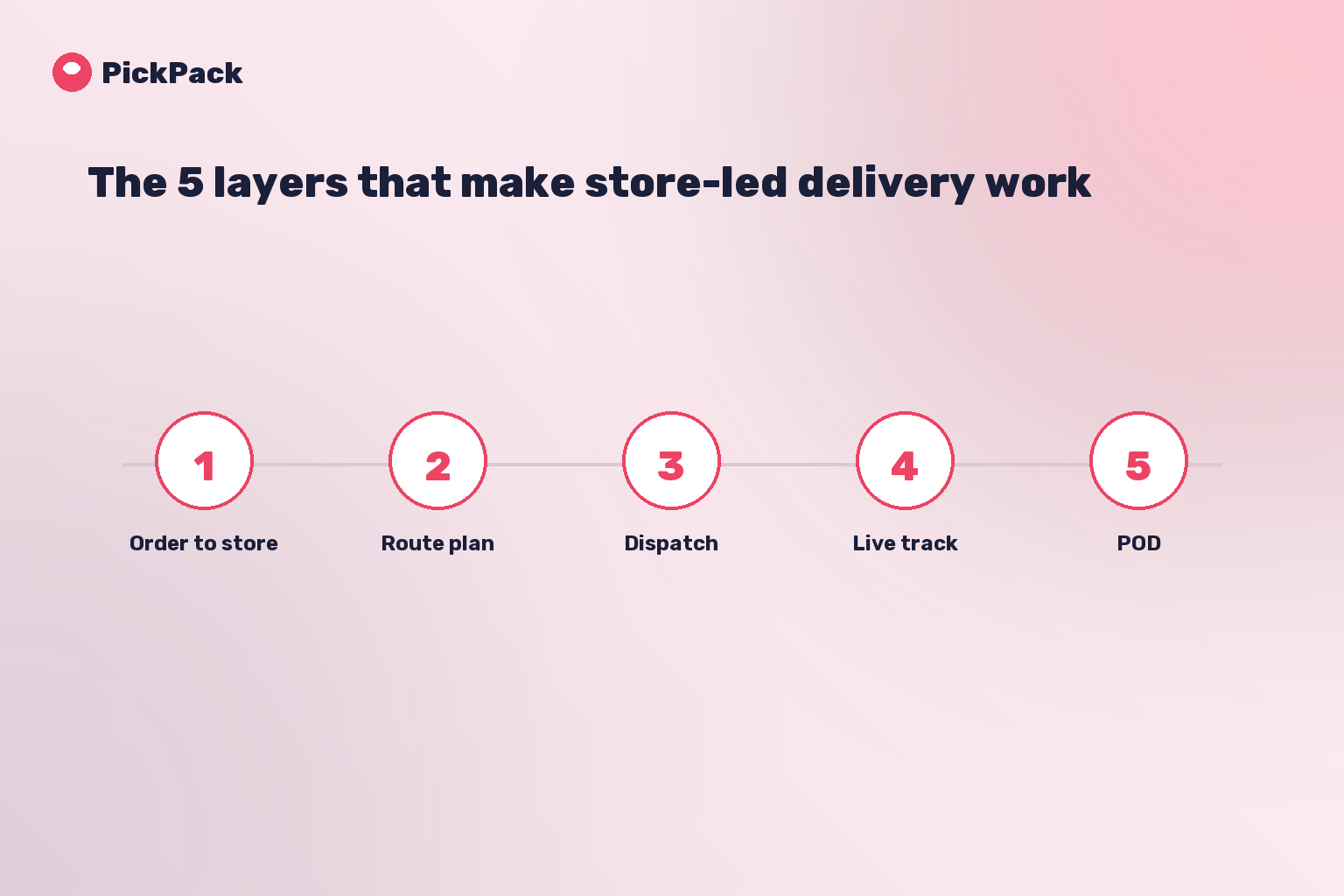
The 5-layer stack that makes store-led delivery work
- Order-to-store allocation: decide which store should fulfill the order based on inventory, location, promised window, and operating capacity.
- Route planning: group stops intelligently by geography, time windows, and vehicle limits. This is where route optimization with time windows becomes practical, not theoretical.
- Dynamic dispatch: when the day changes, the plan has to change with it. Urgent orders, delays, missed pickups, and store bottlenecks cannot wait for a manual re-plan.
- Live visibility and customer communication: the customer, dispatcher, and field team should all be working from the same operational truth.
- Proof of delivery and closeout: if the system cannot confirm what happened at the doorstep, it cannot really manage service quality.
How orchestrated retail delivery differs from manual coordination
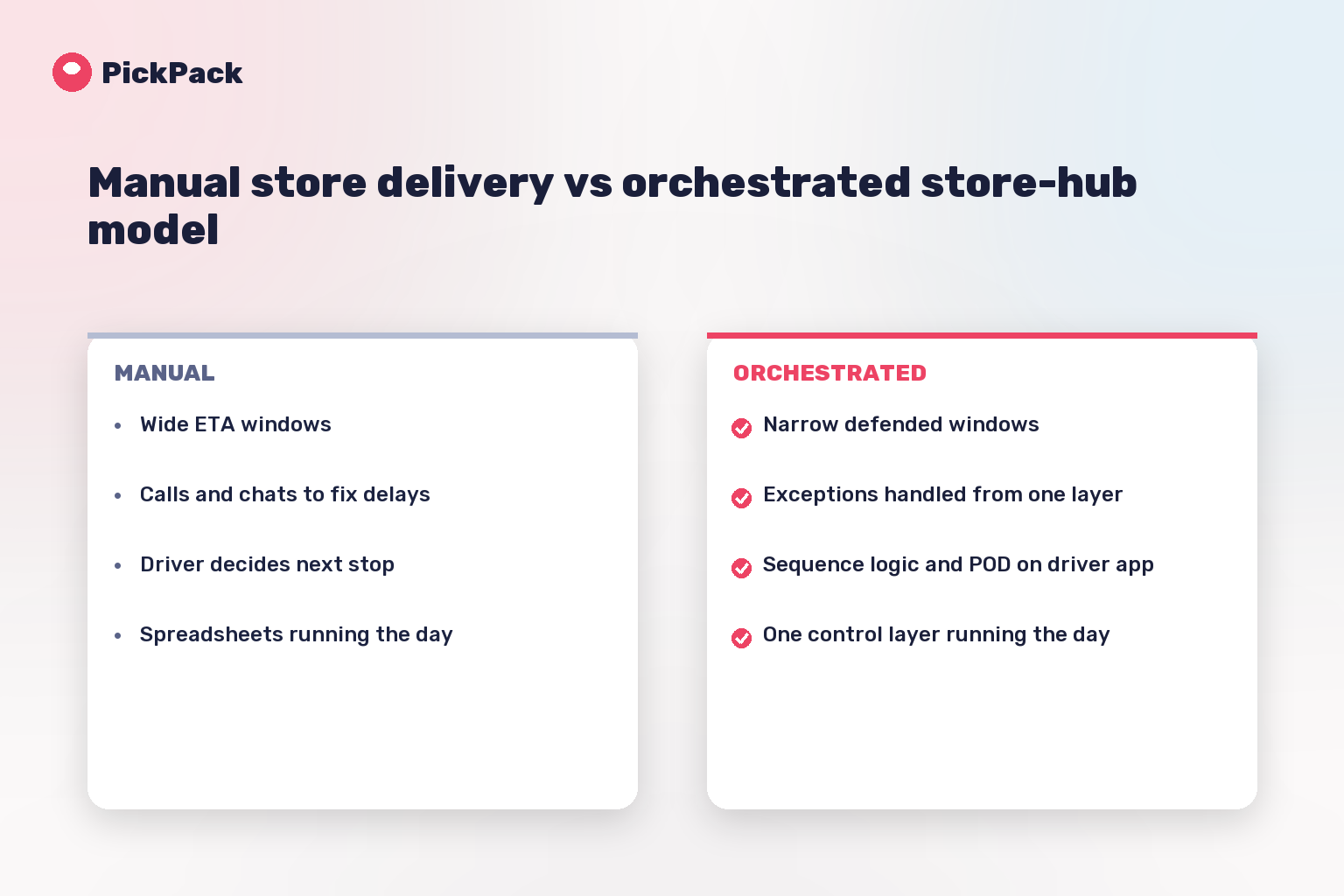
| Area | Manual store delivery | Orchestrated store-hub model |
|---|---|---|
| Store assignment | Based on habit or local preference | Based on inventory, SLA, proximity, and capacity |
| ETA promise | Wide and defensive windows | Narrower windows with better execution visibility |
| Exception handling | Calls, chats, and manual reshuffling | Operational exceptions managed from one control layer |
| Field execution | Driver decides what to do next | Driver app, sequence logic, status discipline, POD |
Where PickPack fits
PickPack is not built as a route-only tool. It is built as a delivery orchestration platform that connects route optimization, dynamic dispatch, field execution, proof of delivery, and customer communication into one operating layer.
That matters in retail because store-led delivery only works when the full day can be managed, not just the initial plan. If an order needs to move to a different driver, if a store is running late, or if a promised window is about to be missed, the system has to help operations make the next decision quickly.
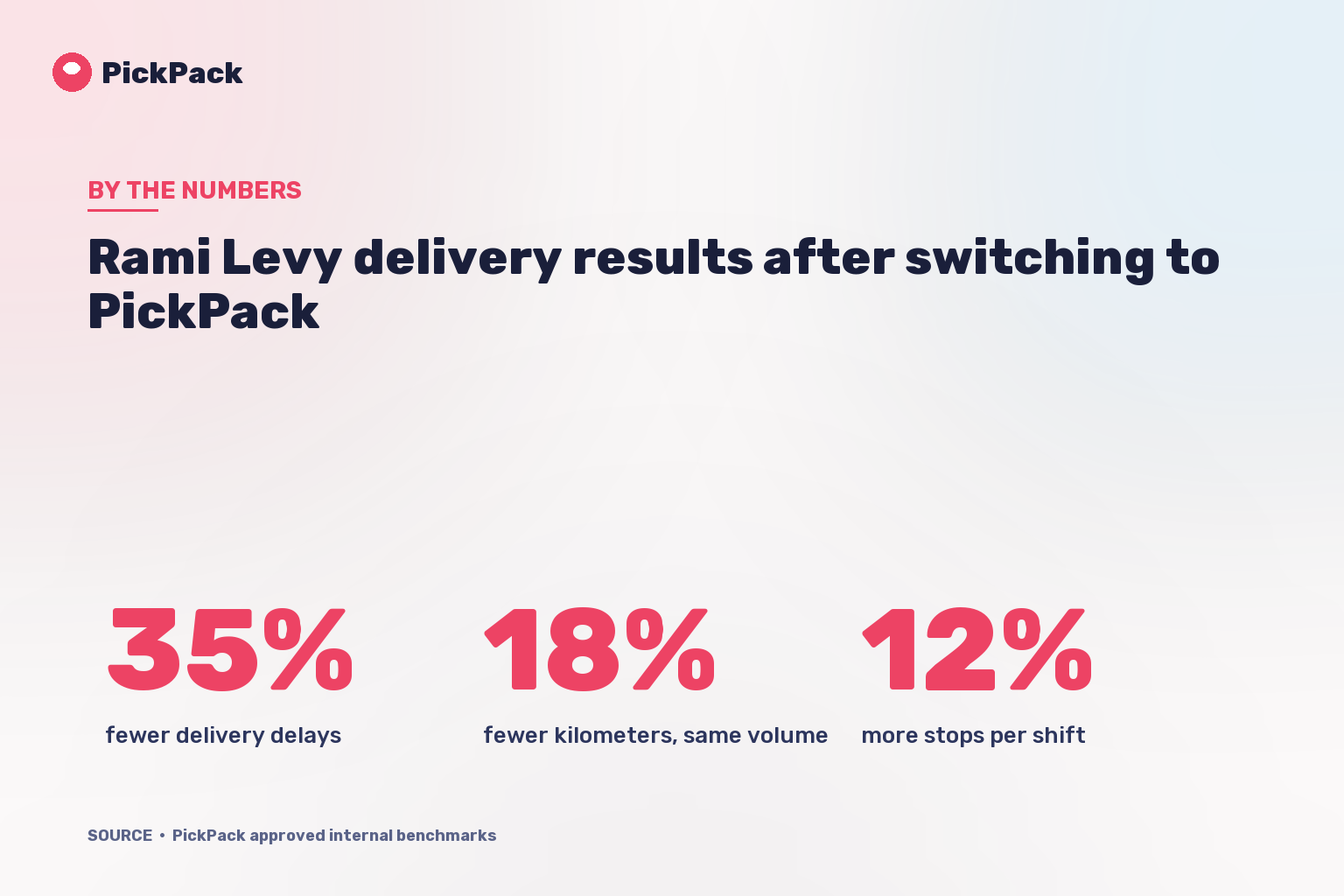
That is also why named proof matters more than generic AI language. According to PickPack’s approved internal customer benchmarks, Rami Levy achieved 35% fewer delivery delays, 18% fewer kilometers for the same volume, and 12% more stops per shift. That is the kind of result that turns store delivery from “possible” into “repeatable.”
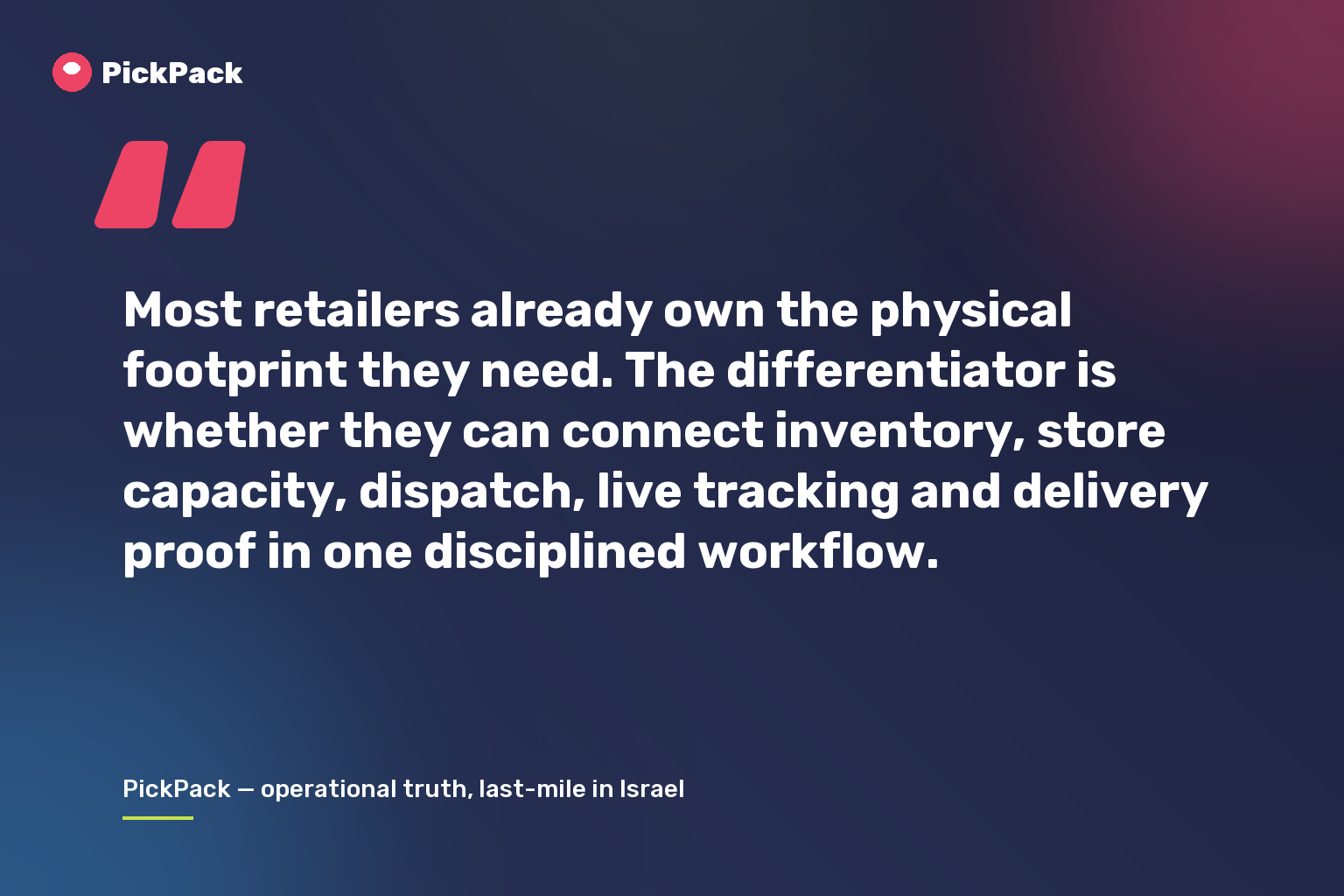
The operational truth: most retailers already own the physical footprint they need. The real differentiator is whether they can connect inventory, store capacity, dispatch logic, live tracking, and delivery proof in one disciplined workflow.
FAQ
No. The better path is usually a regional pilot with stores that already have stable local demand, solid picking discipline, and realistic time windows.
No. Route optimization is necessary, but the bigger operational problem is coordinating order allocation, dispatch, field execution, customer updates, and delivery proof together.
Because many teams still lack confidence in execution visibility. If the operation cannot see what is actually happening in the field, it protects itself with broad promises.
On-time performance, cost per delivered order, kilometers per route, exception rate, and how much manual intervention dispatch teams still need during the day.
Sources
Want to evaluate whether your store network is ready for direct delivery? Start with Route Optimization with Time Windows: A Practical Guide, then map where routing still breaks once dispatch and execution begin.