

Last updated: April 24, 2026
Micro-fulfillment helps pharmacy operators get inventory closer to the customer. It improves availability and reduces distance. But it does not automatically solve the last mile. Pharmacy delivery still depends on dispatch quality, address accuracy, customer communication, documented handoff, and exception handling on the day of execution.
That is why many pharmacy operations do not break at the picking stage. They break after the order is ready, when the team still has to coordinate a narrow delivery window, confirm the destination, handle an urgent insert, and prove what happened at the doorstep.
Quick summary
- Micro-fulfillment improves proximity. It does not replace an execution layer.
- Pharmacy delivery requires tighter windows, better address quality, and clearer proof of delivery than generic parcel work.
- The operational question is not only where stock sits. It is how the day is orchestrated once orders leave the shelf.
- PickPack fits here because it connects dispatch, tracking, POD, and exception handling into one delivery workflow.

Why the Super-Pharm and Fabric story matters
Startup Nation Central highlighted how Fabric and Super-Pharm are improving the path between inventory and the customer. That matters because it shows how seriously pharmacy and retail operators are taking fulfillment speed and availability.
But fast fulfillment is not the same as precise delivery. Once the order is ready, the operation still needs to decide which route should carry it, how the customer is updated, what happens when the address is incomplete, and how the handoff is documented.
Where pharmacy delivery gets stuck in the last mile
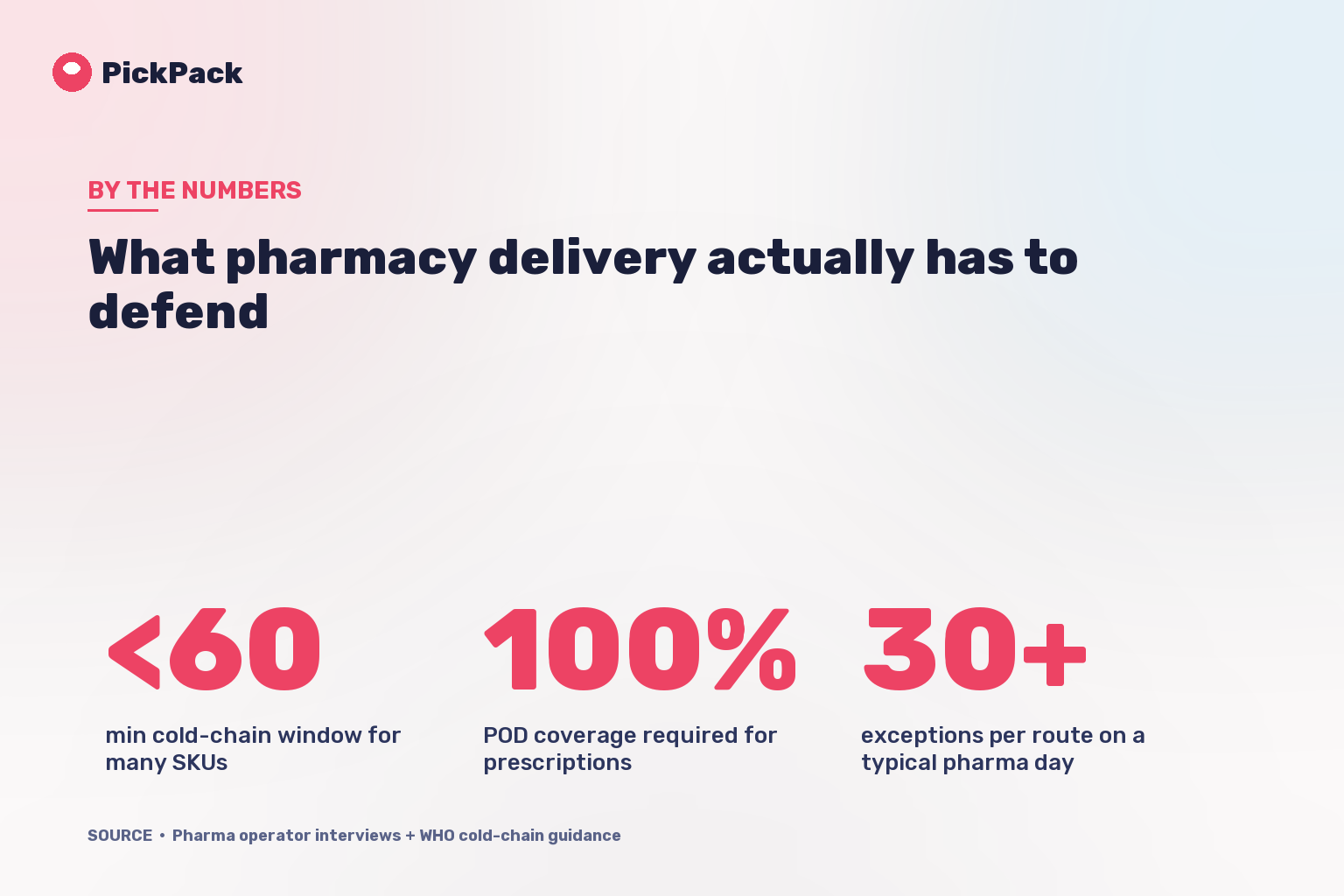
- Reliable time windows: wide promises create weak service and more support calls.
- Address quality: a pharmacy order should not reach the field with missing building or apartment data.
- Documented handoff: POD is part of service quality, not an optional add-on.
- Urgent inserts: not every order has the same service sensitivity.
- Exception workflows: the team needs a defined next action when the customer is unavailable.
- Shared operational truth: dispatch, support, and drivers need the same live status.
The six execution requirements pharmacy teams usually discover late
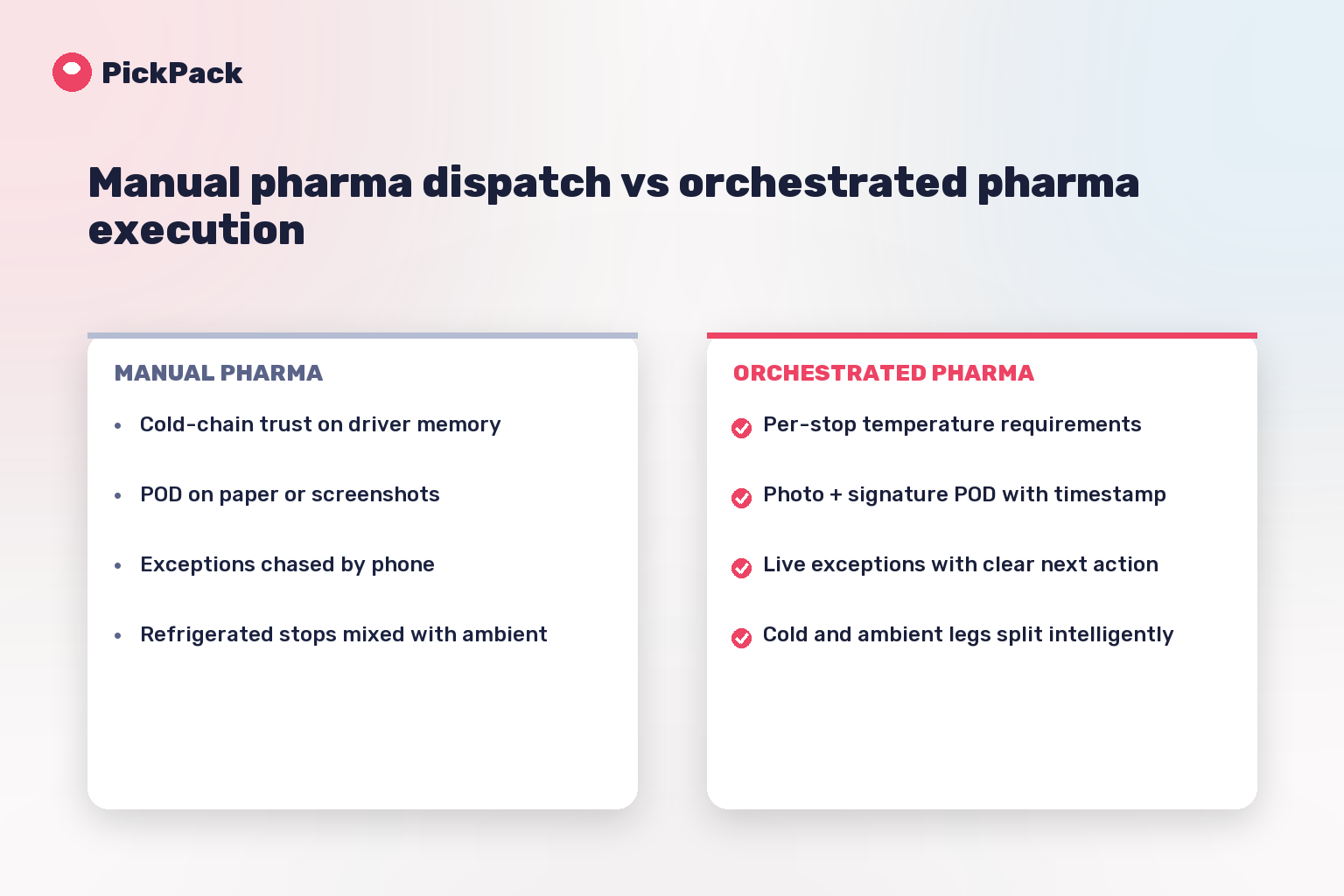
- Smart order allocation based on location, SLA, and current capacity.
- Time-window route planning so pharmacy orders are sequenced around real promises, not only geography. This is where route optimization with time windows becomes operationally useful.
- Dynamic dispatch when the day changes.
- Address validation before the driver is already losing time in the field. AI address validation matters because prevention is cheaper than recovery.
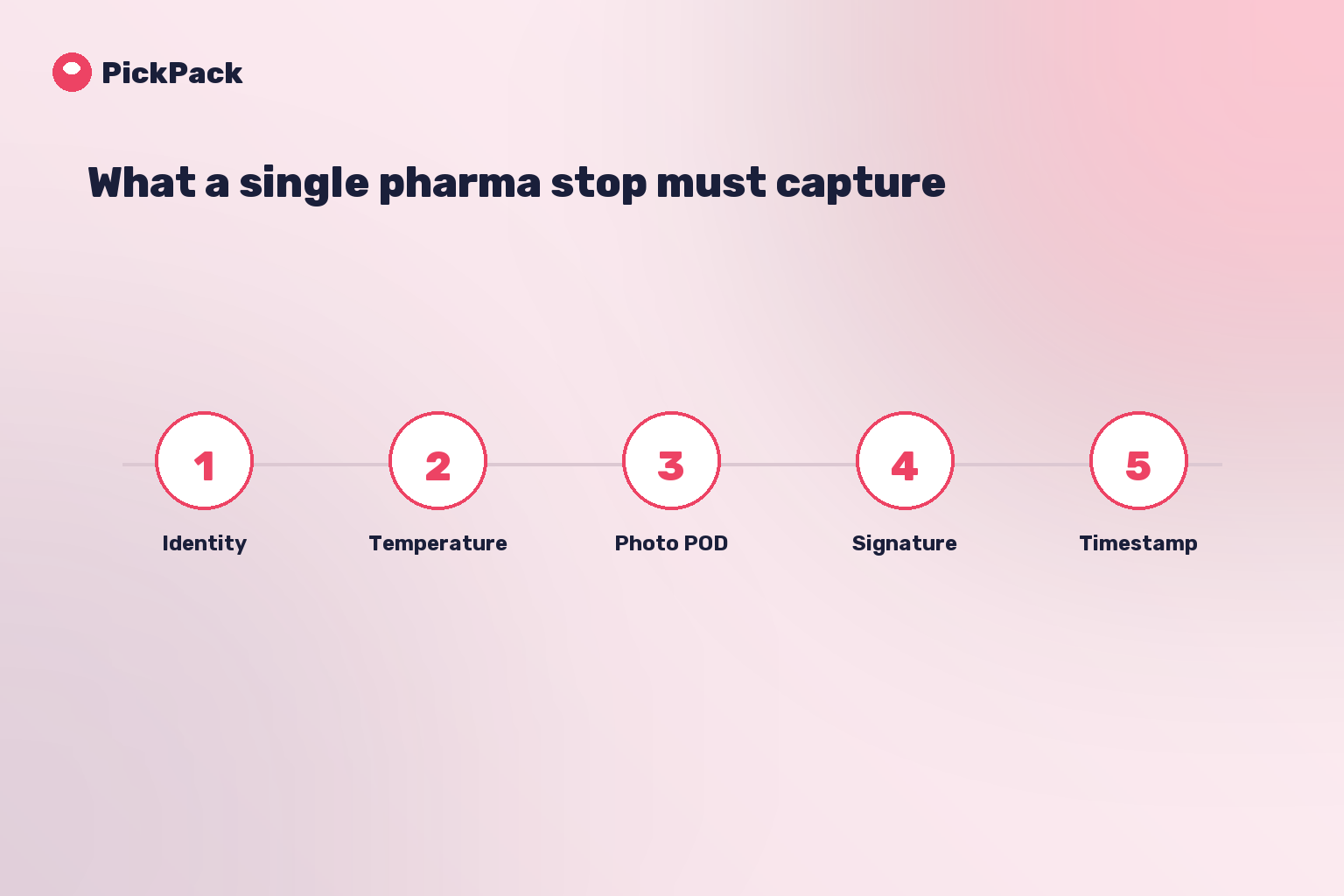
- Proof of delivery with photo, signature, or other documented handoff logic.
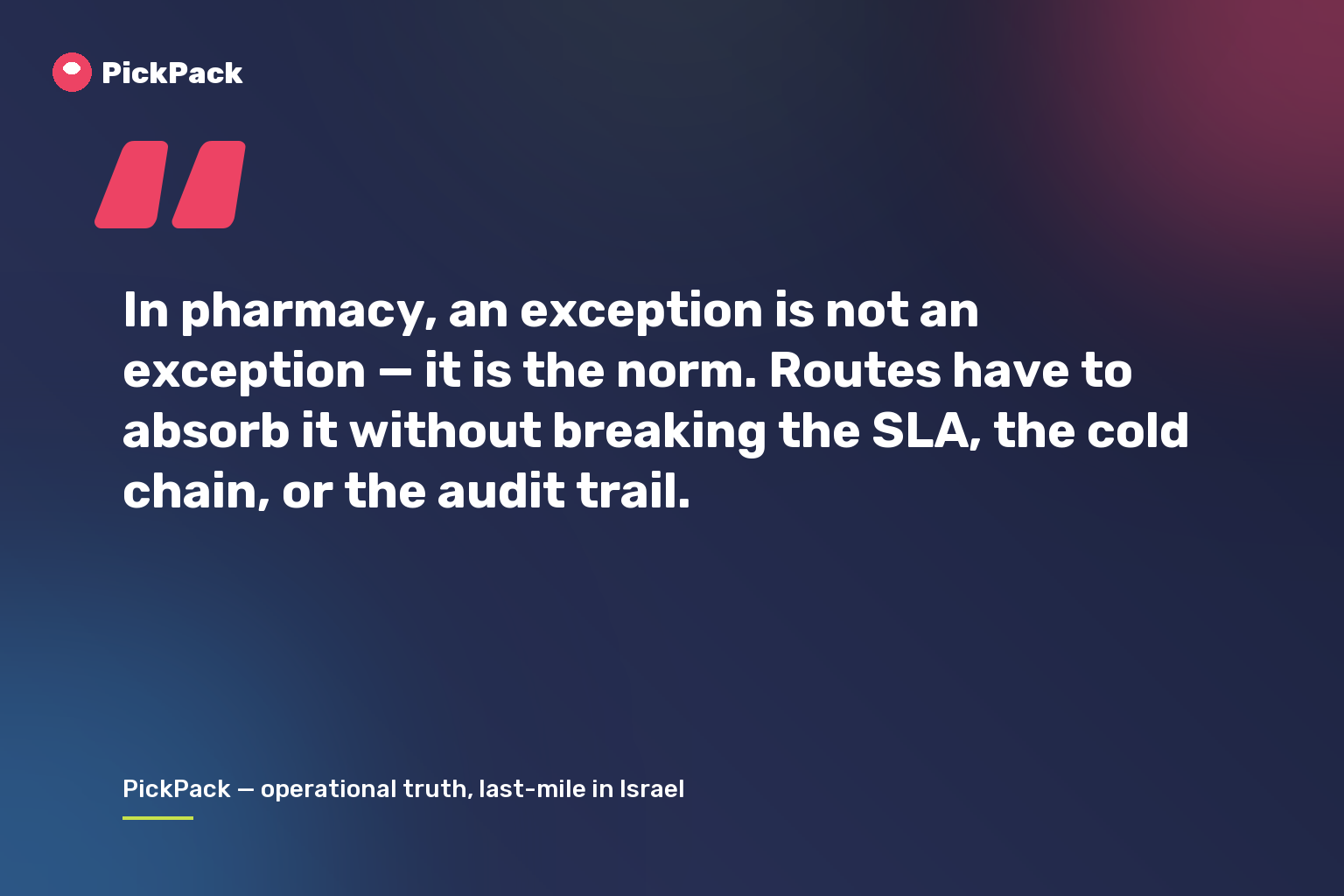
- Exception visibility so teams can manage the day instead of chasing the day.
Where PickPack fits
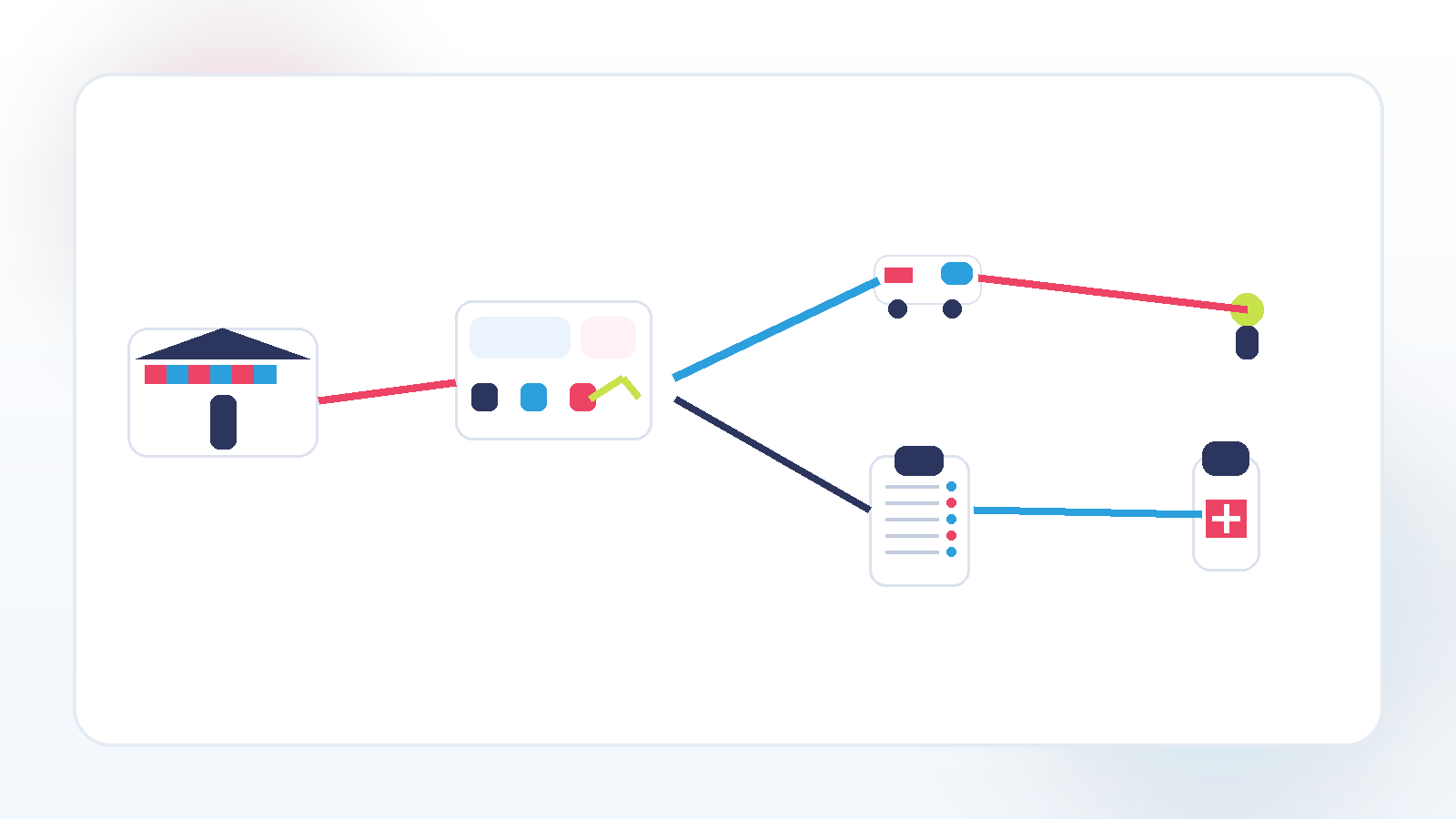
PickPack is relevant because pharmacy delivery is not a route-only problem. It is an execution problem. Dispatch, proof of delivery, customer communication, live tracking, and rapid exception handling all need to operate together.
That is why named proof matters here. According to PickPack’s approved internal customer benchmarks, Rekach Pharmaceuticals reached 100% chain-of-custody compliance, zero address-error returns, and 2-hour urgent delivery capability. That is the difference between faster fulfillment and controlled execution.
Bottom line: micro-fulfillment improves stock proximity. It does not replace dispatch discipline, documented delivery, or day-of execution control.
Related reading
FAQ
It can reduce distance and improve availability, but it does not remove the need for dispatch, customer communication, or documented handoff.
Because the service expectation is higher and the cost of unclear handoff is higher. Teams need a reliable record of what happened.
Address quality, time-window logic, POD, and exception handling usually expose the biggest gaps first.
Sources
- Startup Nation Central: Israeli smart logistics innovation companies
- McKinsey: What’s next for pharmacies in Latin America
Want to pressure-test your pharmacy delivery flow? Start with address quality and time-window route planning, then look at the exceptions your team still handles manually.