
Last updated: April 24, 2026
Courier operations do not break only because volume is high. They break because of double-handling: a parcel gets picked up, moved through too many hands, returned to a staging area, reassigned to another driver, or delayed because pickup, drop-off, and return were never managed as one chain. (all PickPack comparisons)
That is why strong parcel teams do not only build task lists. They build dependency logic, scan gates, and clear ownership around every handoff.
What creates double-handling
- Pickups that are not connected to their downstream task flow.
- Partial scan discipline at load and return stages.
- Unclear ownership between pickup, delivery, and return actors.
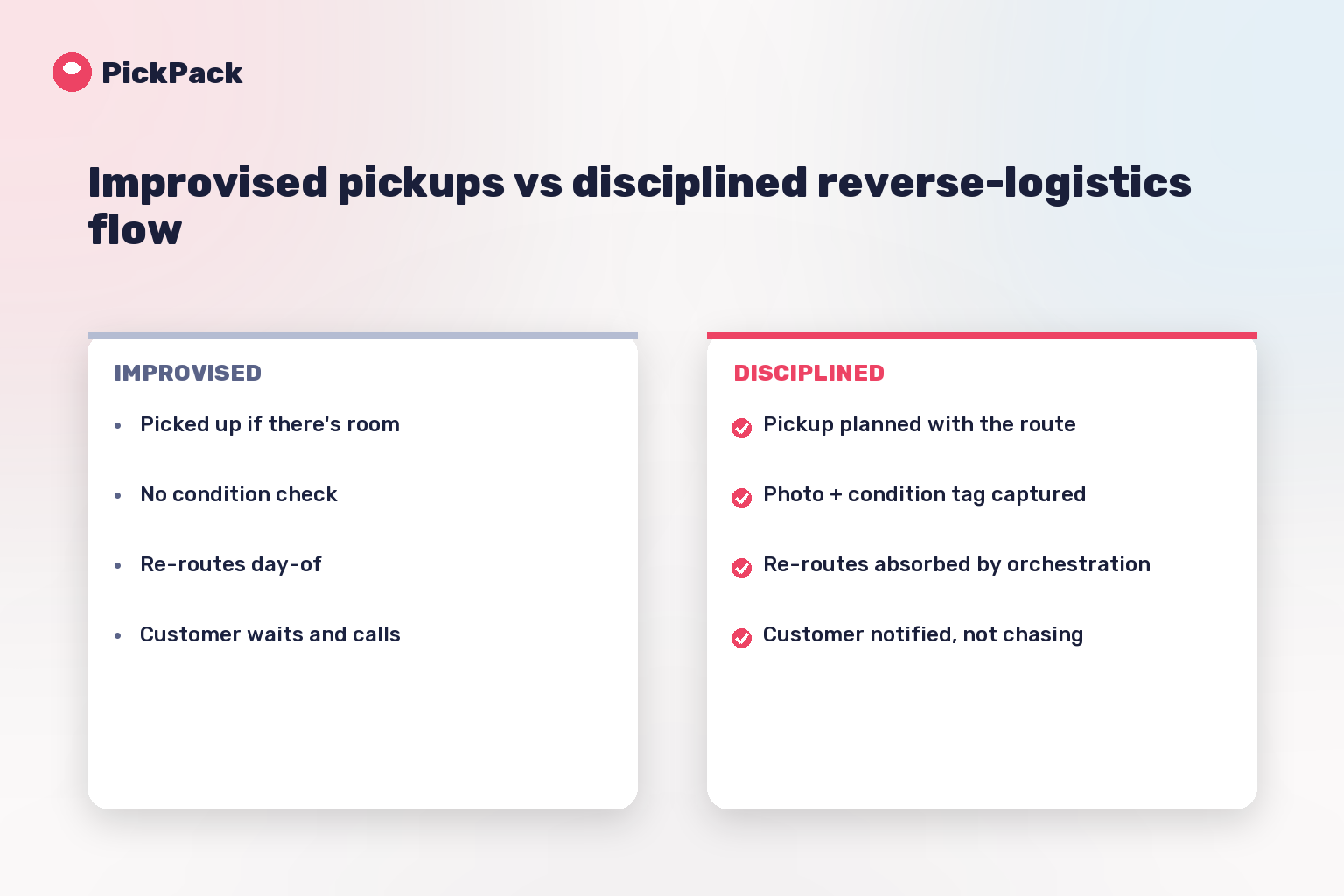
- Returns managed as an operational pile instead of a structured flow.
What Onfleet highlights about task dependencies
Onfleet’s linked-task guidance makes an important operational point: dependent tasks are meant to stay in sequence and be assigned to the same driver. The newer Route Load Task workflow adds a scanning and verification step before departure. That matters because if sequence and scan discipline are weak at the start, the error compounds later in the day.
Completion logic matters here too. Pickup, delivery, and return should not all close under the same loose rules regardless of what happened operationally.
How to design the chain correctly
- Link pickup to downstream work where dependency exists.
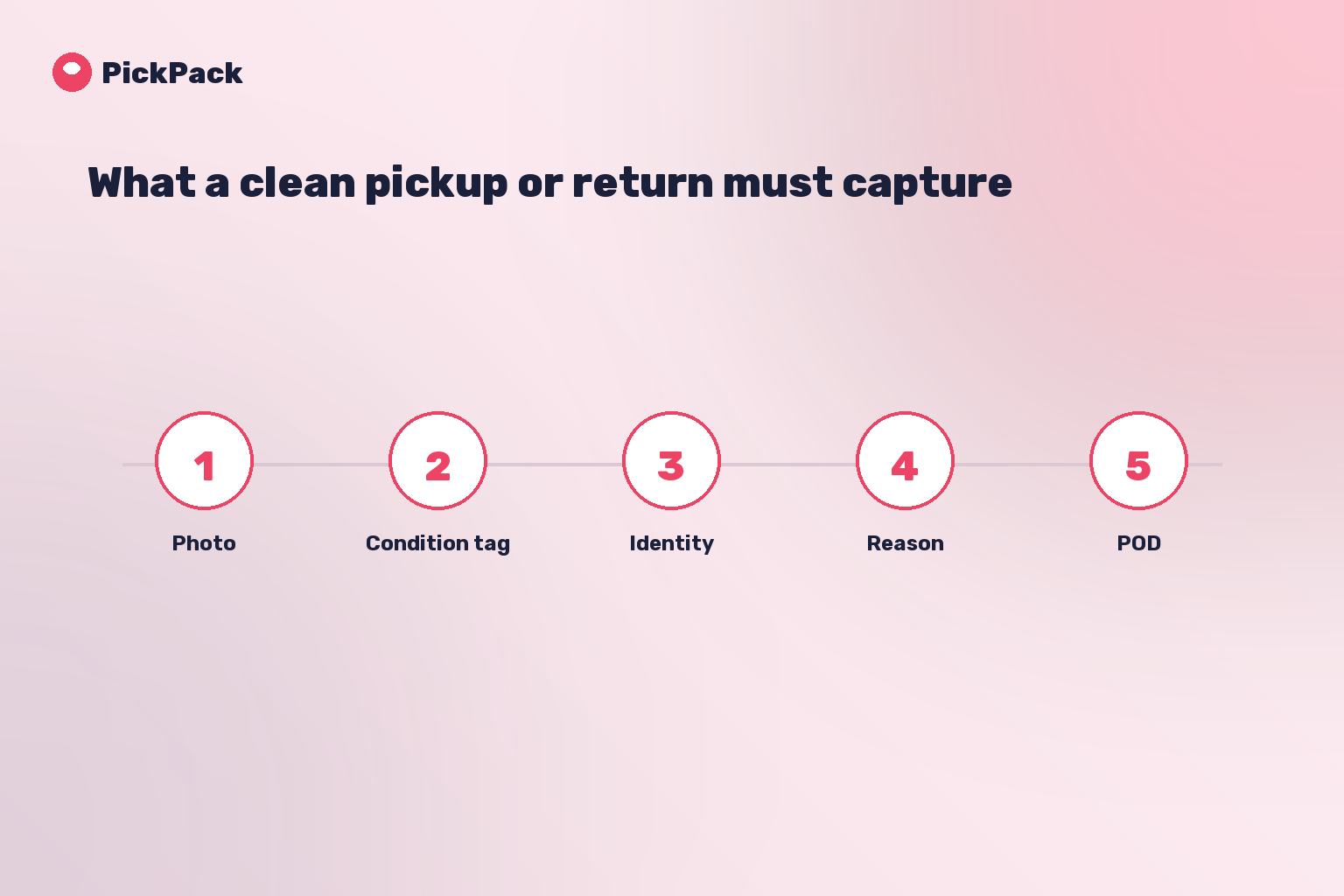
- Define a scan gate for load, transfer, and return acceptance.
- Set clear handoff ownership so every parcel state has an accountable operator.
- Treat returns as a planned flow, not end-of-day cleanup.
- Trigger alerts when the chain breaks instead of discovering the issue later.
Why this matters commercially
Double-handling consumes time, adds error, and damages trust. According to PickPack’s approved internal benchmarks, Omer Deliveries manages 1,800+ daily shipments, grew by 50% with the same team, and reduced planning time from 3.5 hours to 25 minutes. In courier work, that is a strong signal that the task chain is controlled rather than improvised.
Where scanning and ownership should change
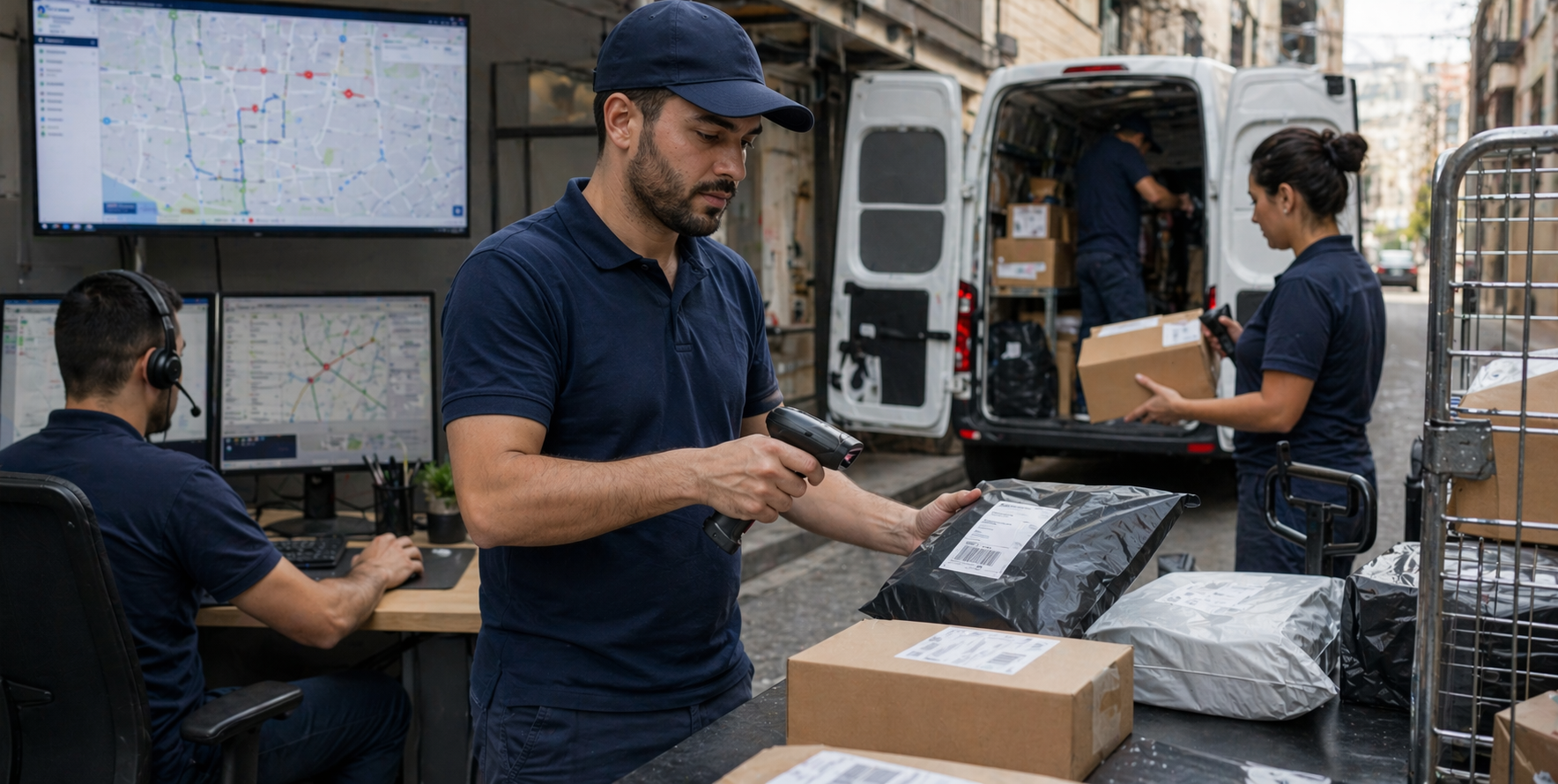
Many parcel teams still scan only at the final handoff. That is too late. Double-handling usually begins at load, transfer, or return acceptance, which means the first useful control point is earlier in the chain.
- Scan at load: confirm what actually entered the route, not only what was planned.
- Scan at transfer: every internal handoff should create accountability, not ambiguity.
- Scan at return intake: returned parcels need a clean operational state the moment they re-enter the network.
- Assign one owner per broken chain: otherwise every team assumes someone else is handling it.
Related reading
FAQ
Any unnecessary internal transfer, re-sort, or handoff caused by poor flow design rather than customer need.
Because they keep dependent pickup and drop-off work inside one controlled sequence.
Start with load scanning, pickup-dropoff-return linkage, and an exception rule when the chain breaks.