

Last updated: April 24, 2026
Many Israeli retail, wholesale, and distribution companies already run on Priority ERP. That makes sense. ERP should own inventory, orders, finance, and business process consistency. But the operational question arrives later: does the ERP also run the delivery day itself?
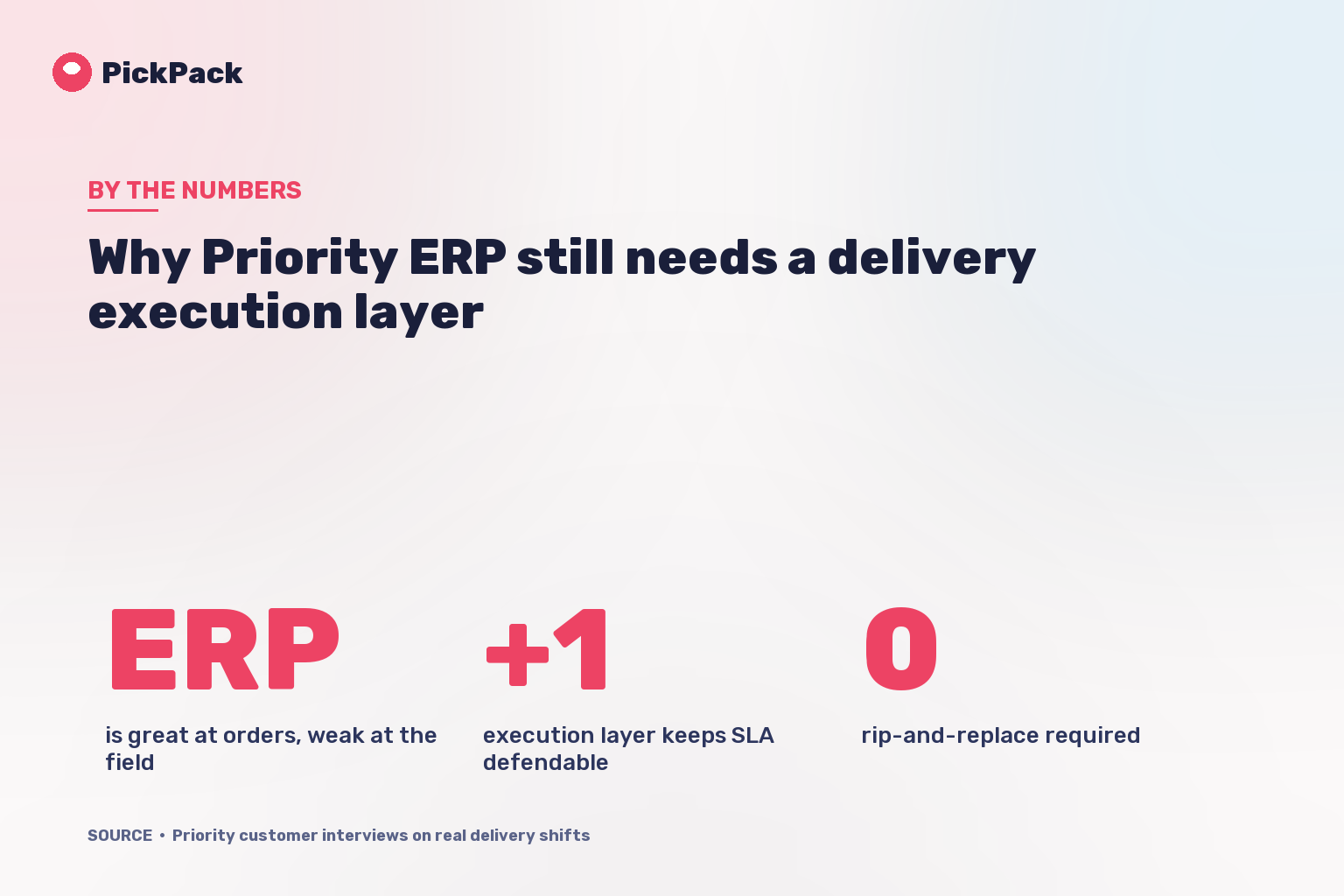
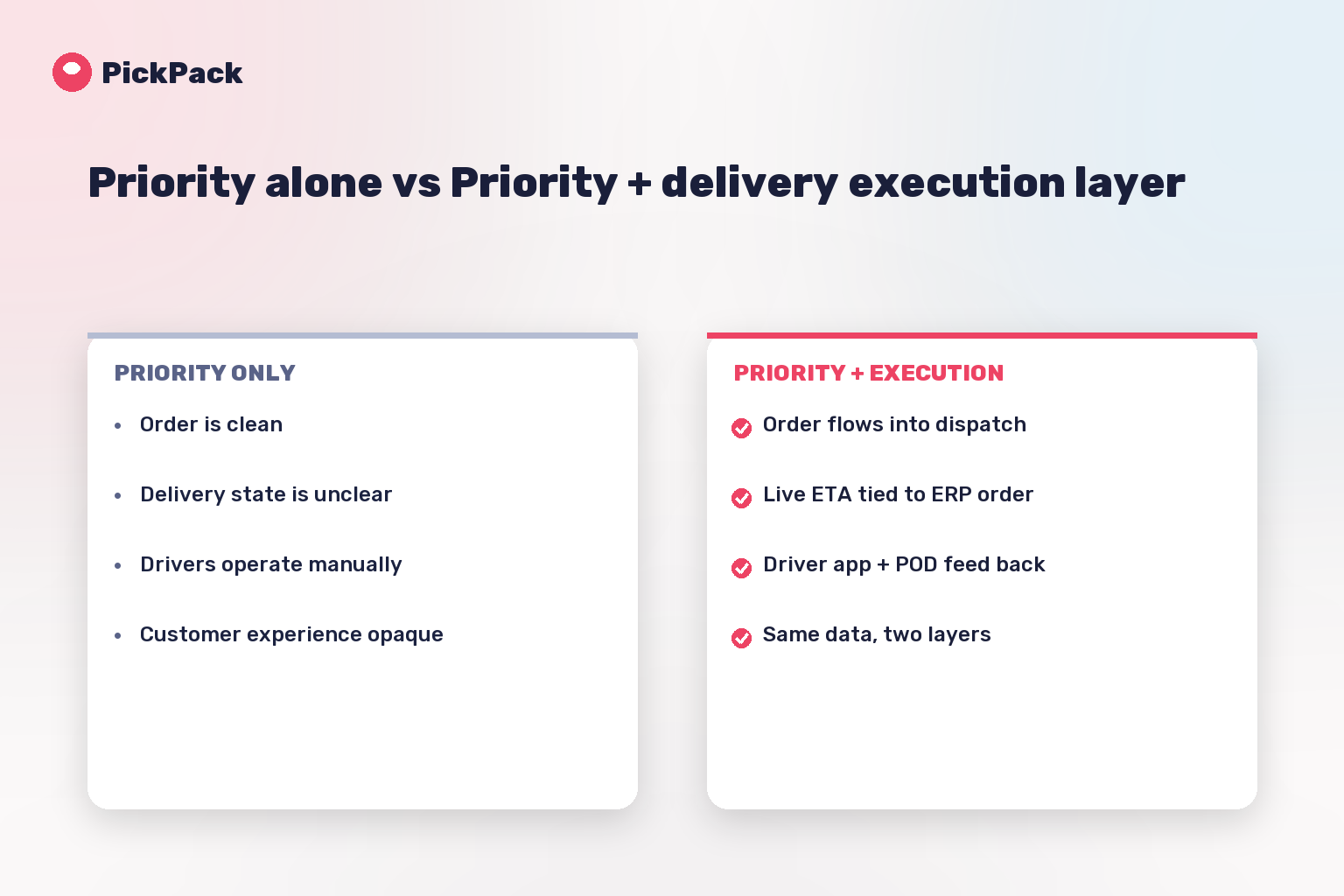
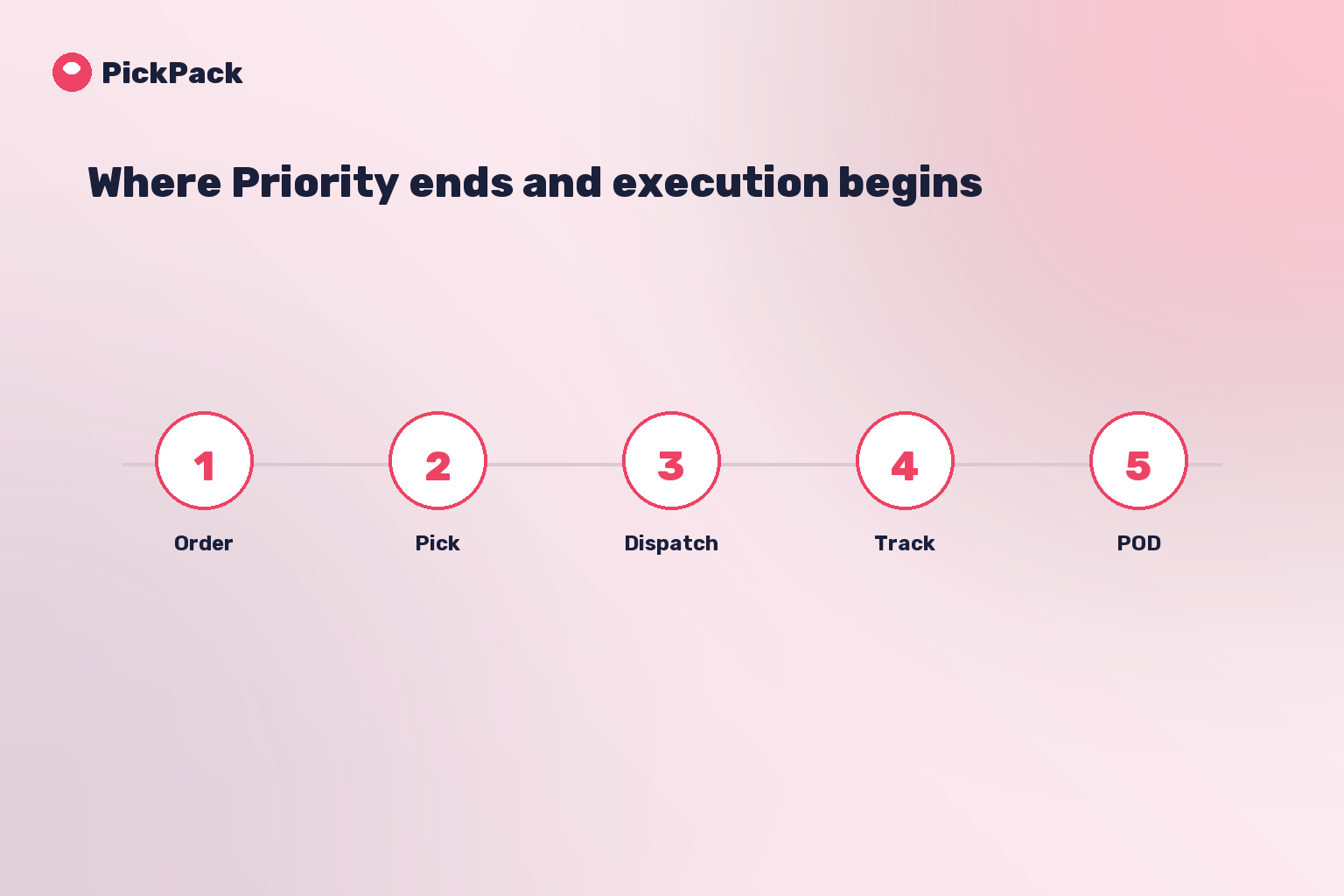
In most cases, the answer is no. ERP is the system of record. It is not automatically the dispatch, tracking, proof-of-delivery, and exception layer teams need between the first departure and the last completed stop.
The core point
- ERP protects the business truth.
- Delivery execution protects the operational truth.
- The advantage is the connection between them, not pretending one replaces the other.
What Priority ERP does well
Priority’s wholesale and logistics ERP messaging focuses on inventory, logistics workflows, and business process control. That is exactly why companies rely on it as a core system.
But the delivery day is a different layer. Teams still need to decide which vehicle should take the order, what happens when a customer is unavailable, how ETAs are sent, how proof of delivery is captured, and how planned and actual outcomes are measured.
Where ERP stops on delivery day
- Real-time dispatch: ERP is not usually the screen that handles live reshuffling.
- Driver workflow: drivers need task-by-task execution logic, not only order records.
- Customer communication: ETA messages and live updates are part of service execution.
- Proof of delivery: photo, signature, and GPS are operational closeout steps.
- Day-of change handling: urgent inserts and service exceptions require fast re-decisioning.
What a good integration model looks like
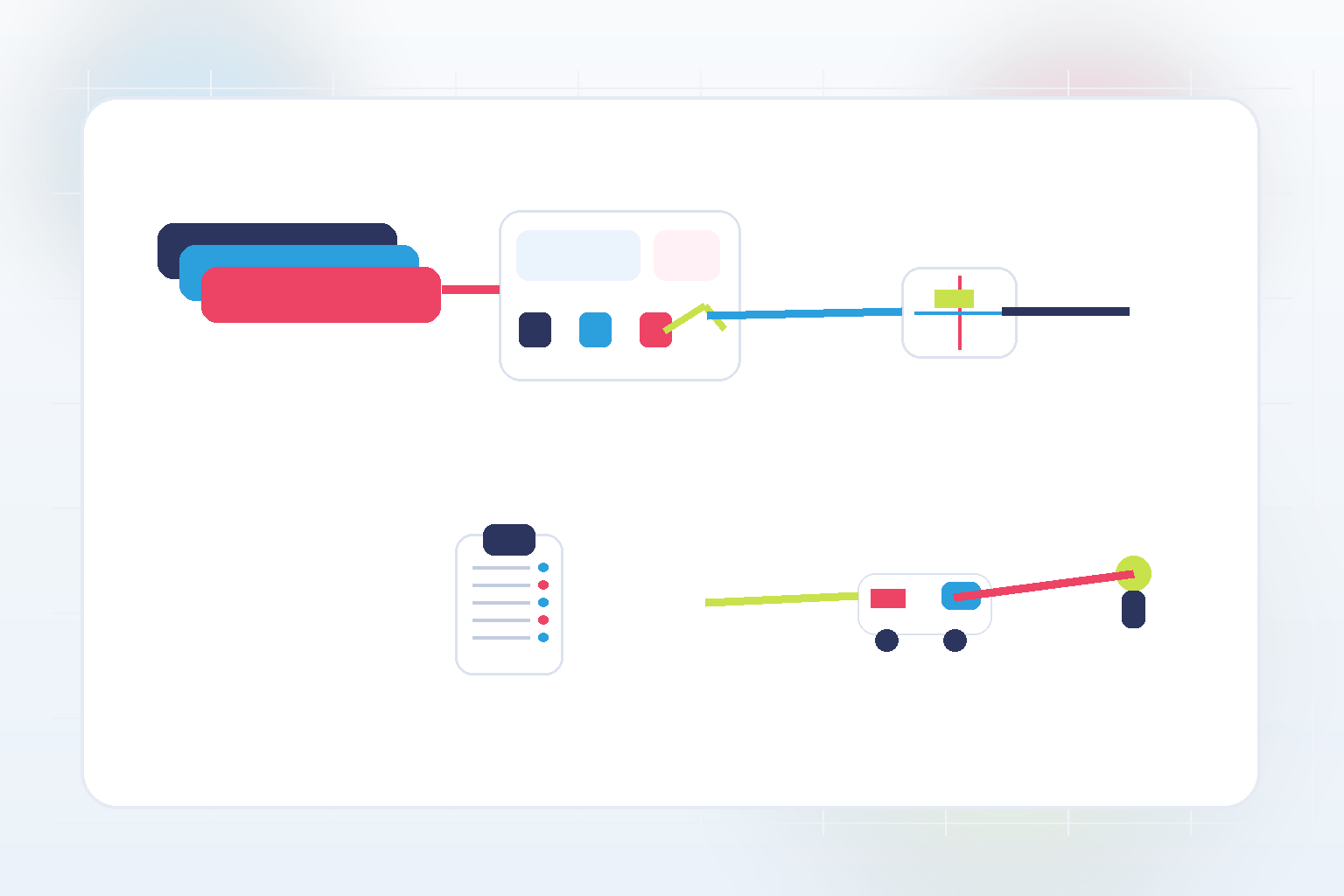
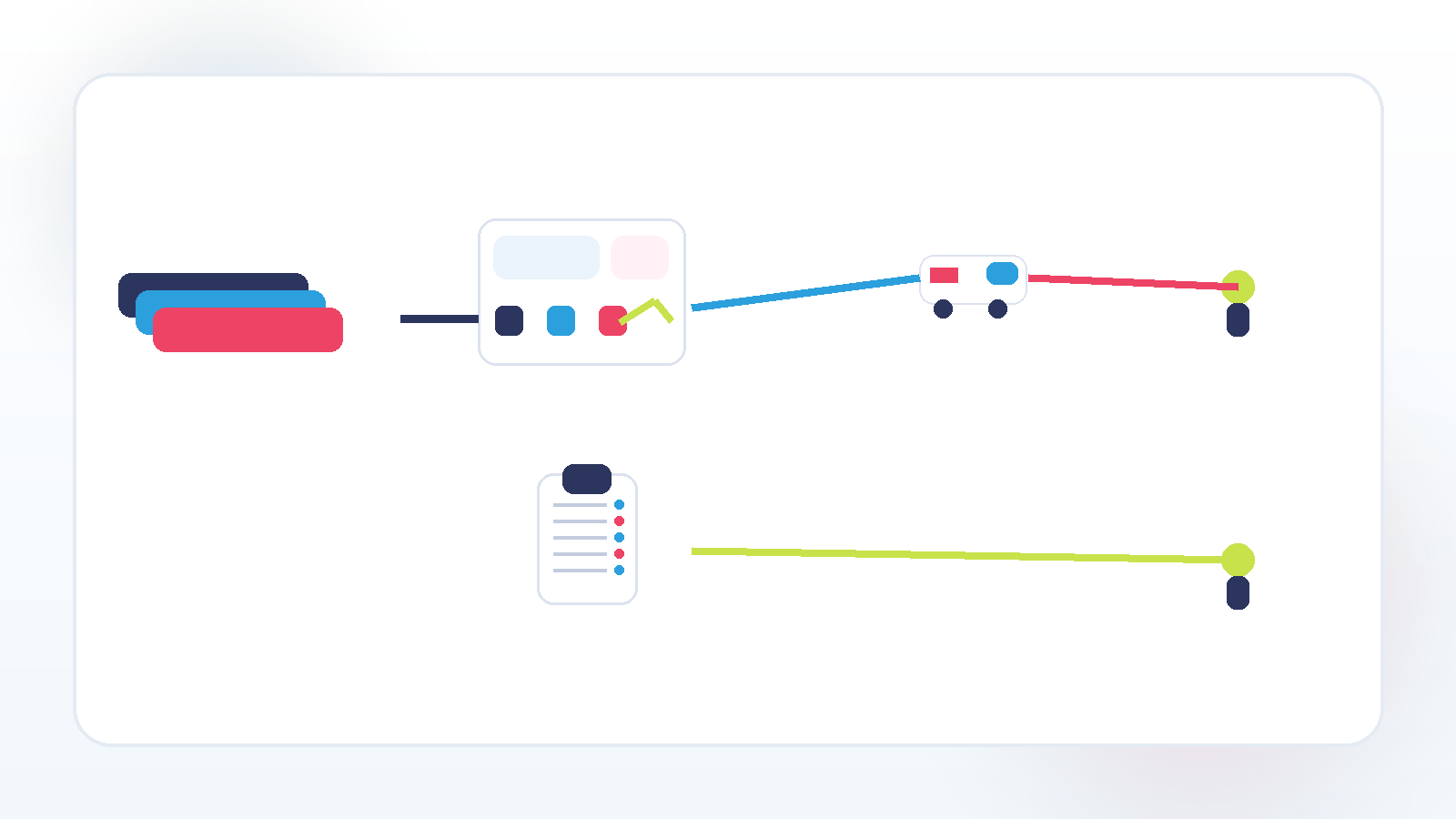
- ERP sends order, customer, and inventory data into the execution layer.
- The execution layer plans, dispatches, and manages the day.
- Execution status returns to ERP so the business keeps one source of truth.
That is where PickPack fits, including Priority ERP integration as an approved capability.
Where PickPack fits
PickPack gives the execution layer what ERP should not be forced to become: route optimization, dynamic dispatch, driver tracking, customer communication, POD, and SLA analytics.
That is also a real local-market angle. For Israeli teams, the point is not to replace ERP. The point is to connect ERP with a delivery orchestration layer that can manage operational reality.
Questions operations and IT should align on before integration
The ERP conversation gets easier when teams define ownership clearly before the integration starts. Operations should not assume IT will define dispatch logic, and IT should not assume operations has already documented exception rules.
- Which events must flow from ERP into delivery execution at order creation time?
- Which execution statuses must return to ERP for finance, service, and audit needs?
- What is the fallback process when execution data conflicts with the original order data?
- Who owns customer communication rules for ETA, delay, and failed-delivery updates?
Those questions usually determine whether the integration becomes a working operating model or just a technical connector.
Related reading
FAQ
ERP is enough to answer what was ordered, what is in stock, and what business process state exists. It is usually not enough to answer what is late, what was delivered, and what needs to change right now.
No. A strong ERP is valuable. It just needs the right execution layer connected to it.
When order data exists but the delivery day still runs through calls, spreadsheets, and chat messages.
Sources
- Priority Software: wholesale and logistics ERP
- Logistics Viewpoints: five transportation technology trends in 2026
Want to see where ERP stops and delivery execution begins? Start with route planning and map which delivery decisions still happen outside the system.