

Last updated: April 24, 2026
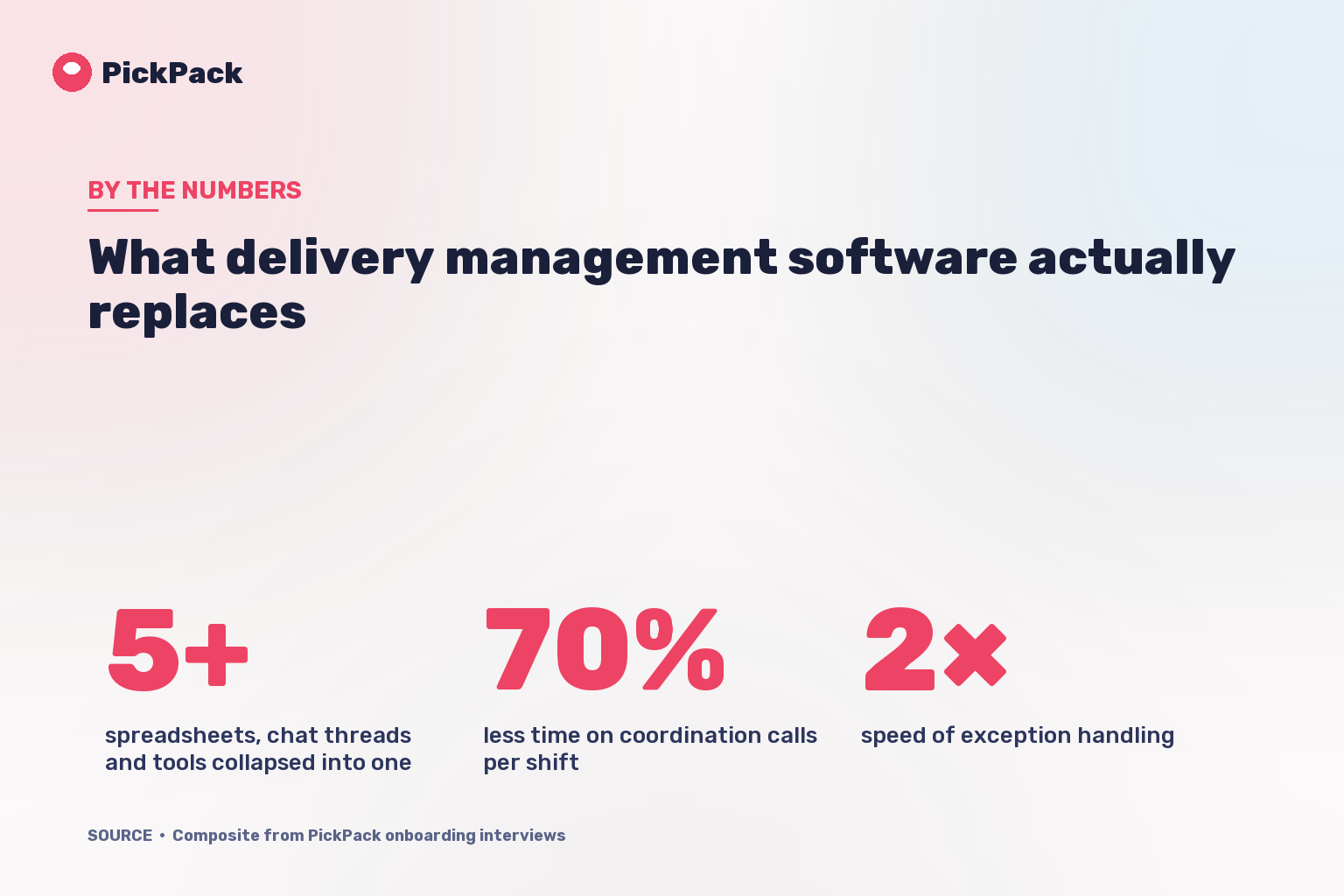
When teams ask what delivery management software really replaces, the honest answer is this: it does not replace the operations manager. It replaces the manual layers that create uncertainty, delay, and noise across the day.
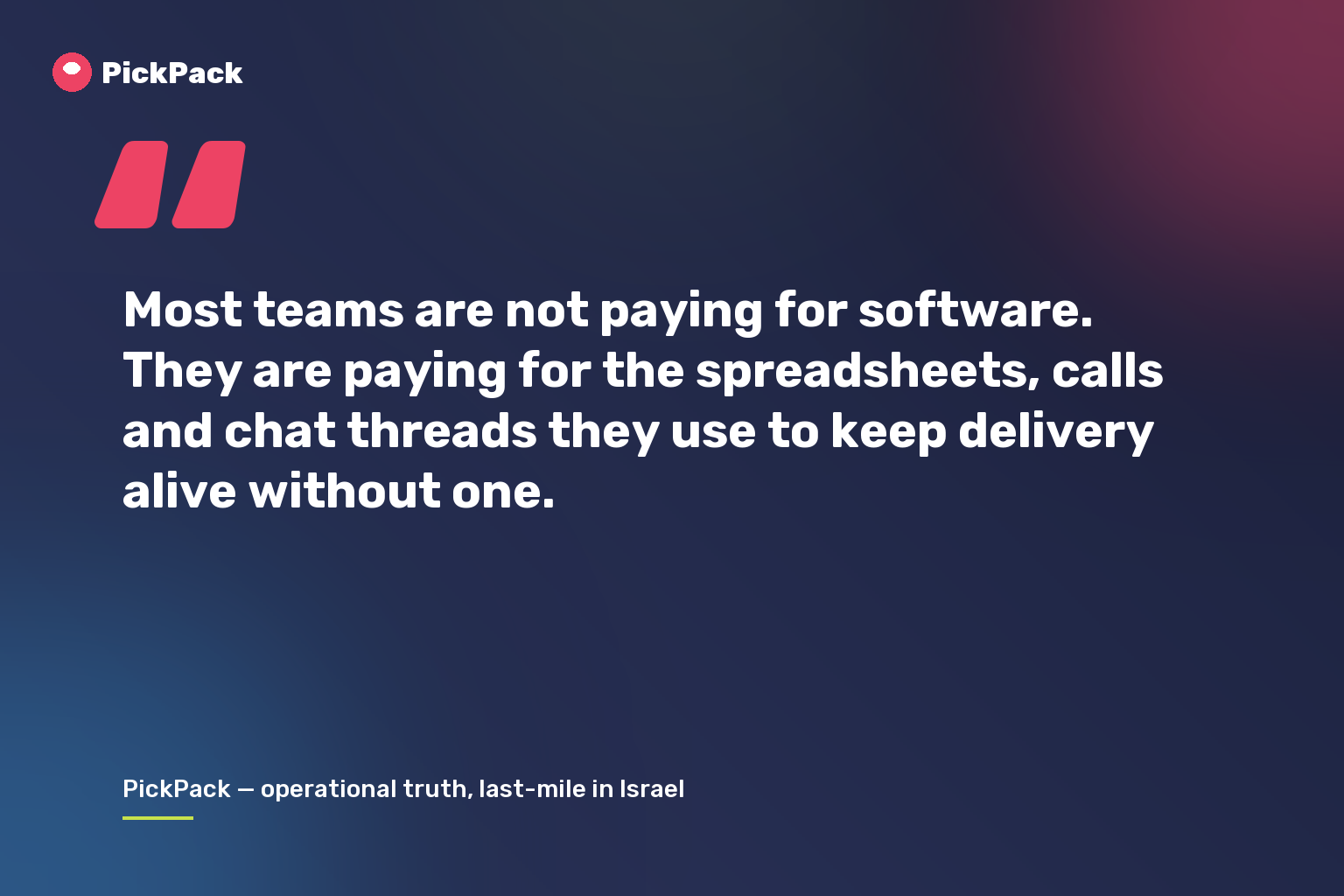
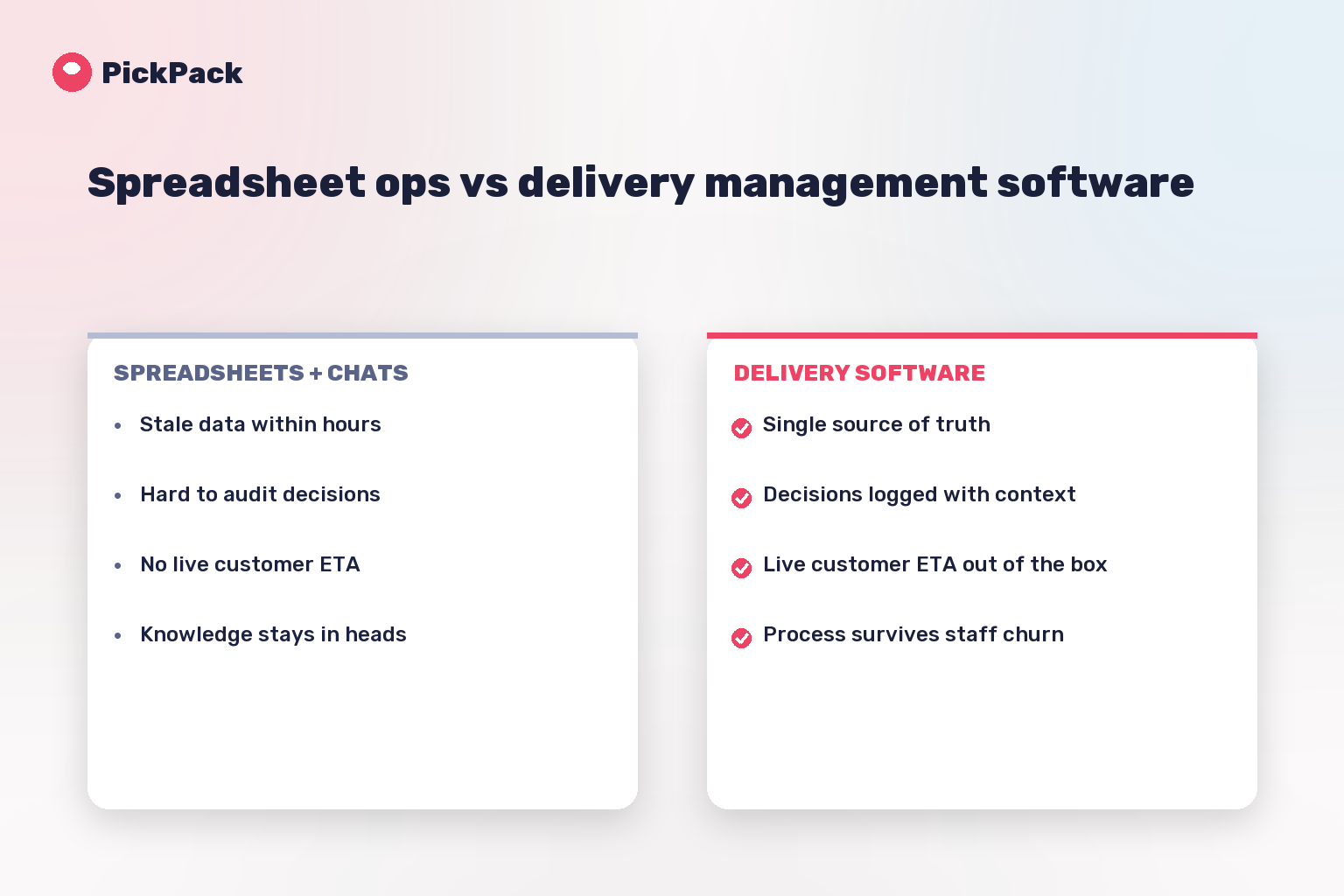
If the operation still runs on spreadsheets, chat threads, phone calls to drivers, and support teams chasing status updates, then the business is not really managing delivery. It is firefighting delivery.
What actually gets replaced
- Spreadsheet planning and status tracking.
- Phone calls just to learn where the driver is.
- Manual reshuffling when the day changes.
- Weak visibility around delivery proof, SLA risk, and exceptions.
Why this is no longer only a convenience issue
Logistics Viewpoints argued in 2026 that the market is moving toward connected execution. That means teams still operating through manual layers are trying to run a dynamic system without a suitable control layer.
Customer pressure is rising too. Bringg’s 2026 delivery study shows how strongly delivery timing and flexibility shape customer experience. This is not only a back-office efficiency topic anymore.
What a manual stack does to an operation
- Planning: orders are built and rebuilt by hand.
- Dispatch: every change becomes a call or message.
- Tracking: teams learn status late instead of live.
- Customer support: the support desk depends on the field for basic answers.
- Closeout: proof of delivery and actual performance stay fragmented.
What delivery management software replaces
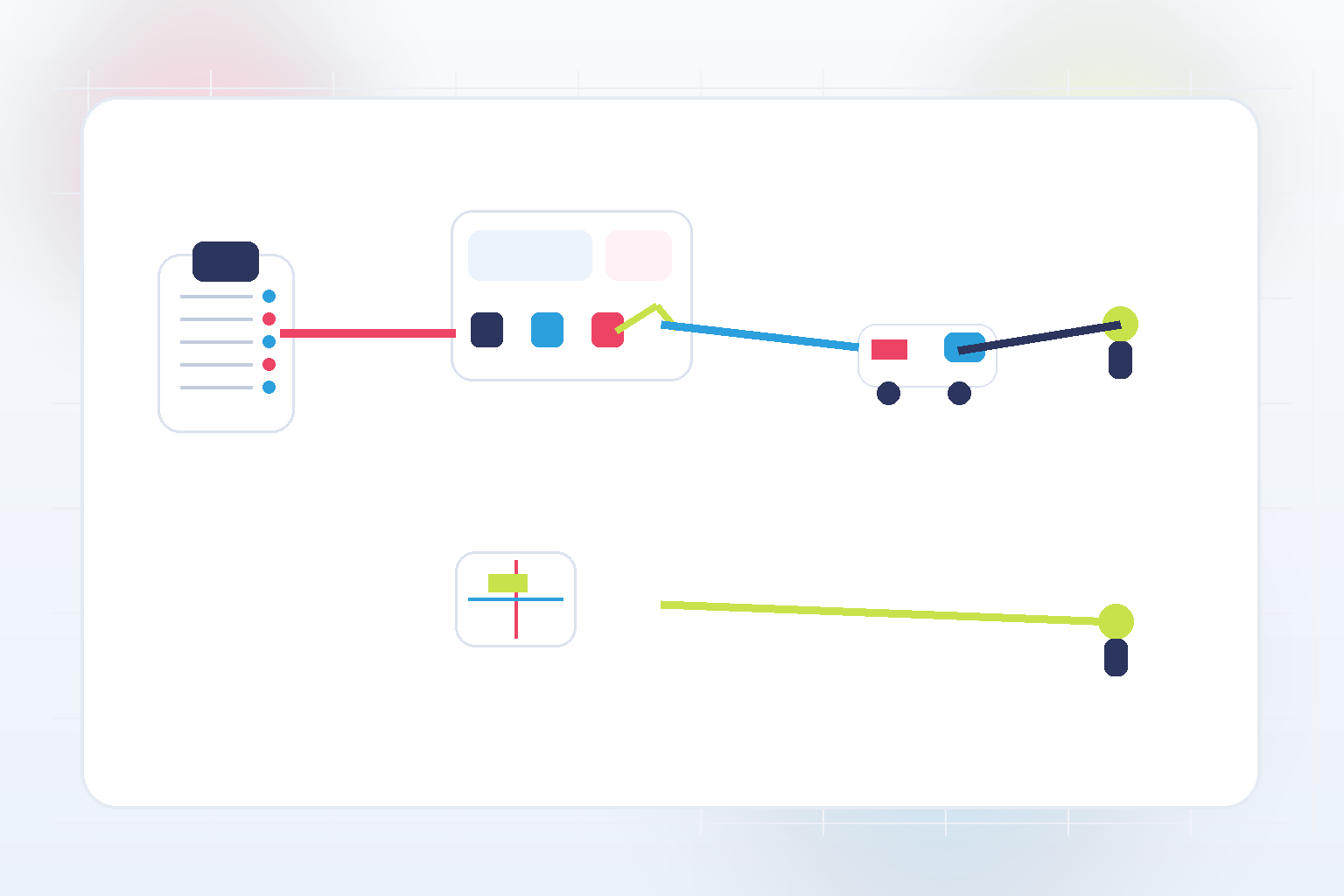
- Manual planning with structured allocation and planning workflows.
- Phone-based dispatch with a central dispatch layer.
- Status chasing with live visibility into the field.
- Loose delivery confirmation with documented POD.
- Decision-making by feel with SLA and performance analytics.
And what does it not replace? Human judgment. Good systems elevate that judgment by removing repetitive coordination work.
Where PickPack fits
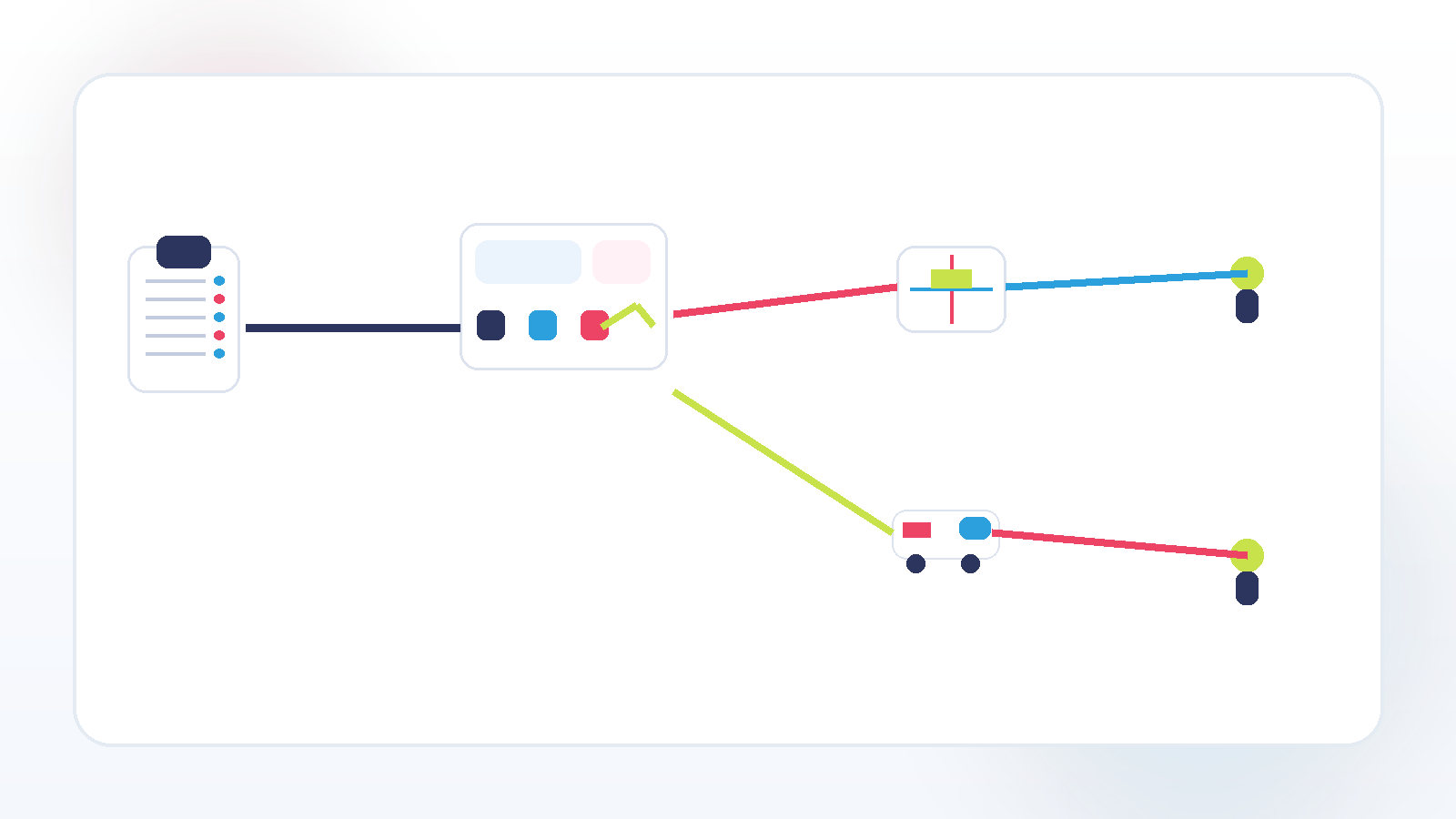
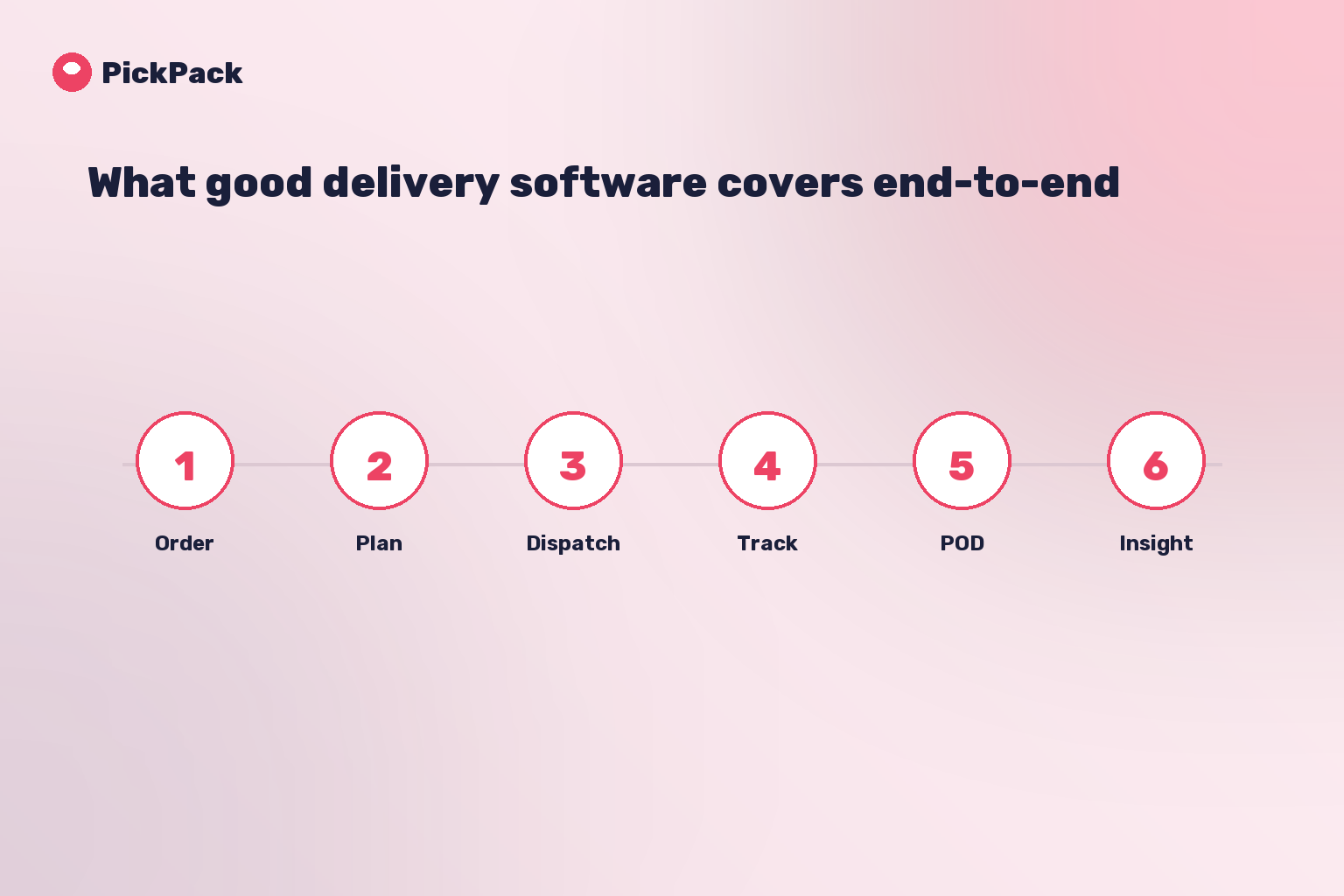
PickPack is built for that transition. It does not stop at the route. It connects dispatch, route optimization, proof of delivery, customer communication, and analytics inside one orchestration layer.
The value shows up in named proof. Omer Deliveries cut planning time from 3.5 hours to 25 minutes. Rami Levy reduced delivery delays by 35%. Those are manual coordination burdens turning into repeatable operating workflows.
What should stay human even after software rollout
Good delivery software should remove repetitive coordination work, but it should not try to remove judgment. Operations leaders still need to decide how aggressive delivery promises should be, which customers require special handling, when a route should be split, and how exceptions should escalate.
The real gain comes when the system handles status discipline and execution mechanics, while people focus on service-level decisions, exception policies, and commercial tradeoffs. That is a healthier division of labor than expecting planners to spend the day updating spreadsheets.
- Keep human ownership over service rules and customer commitments.
- Let the system run the repetitive flow of dispatch, updates, and documentation.
- Measure intervention volume so you can see whether the rollout is actually reducing manual noise.
Related reading
FAQ
No. It changes the planner’s role from repetitive coordination to higher-value control and intervention.
No. The need usually appears as soon as the team can no longer answer simple operational questions quickly and consistently.
When nobody can confidently answer what has been delivered, what is late, and what needs to change now without making several calls.
Sources
- Logistics Viewpoints: five transportation technology trends in 2026
- Bringg 2026 Delivery Experience Study
Want to map what is still too manual in your operation? Start with route planning and address quality, then list which delivery decisions still live in chat threads and phone calls.