

Last updated: April 24, 2026
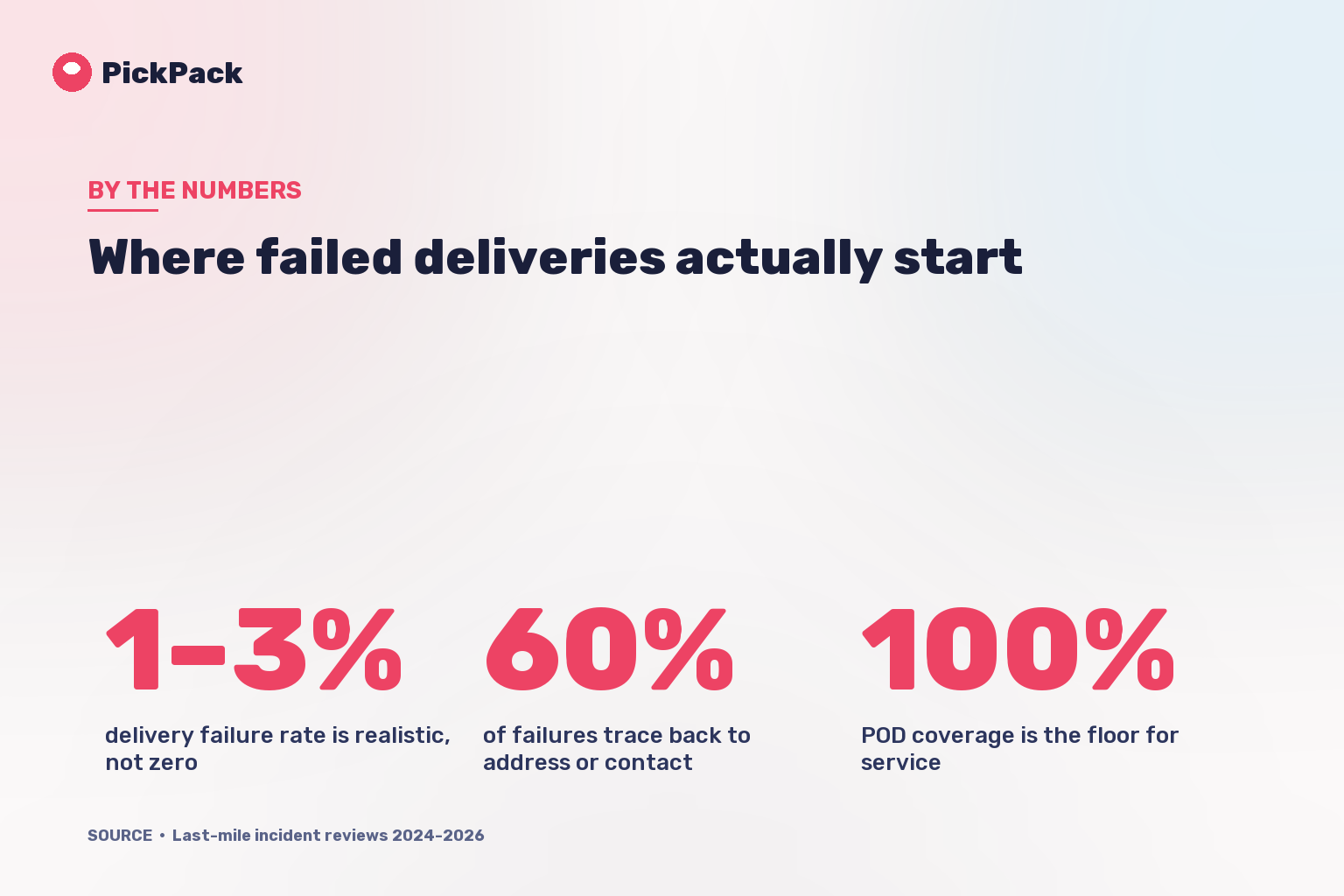
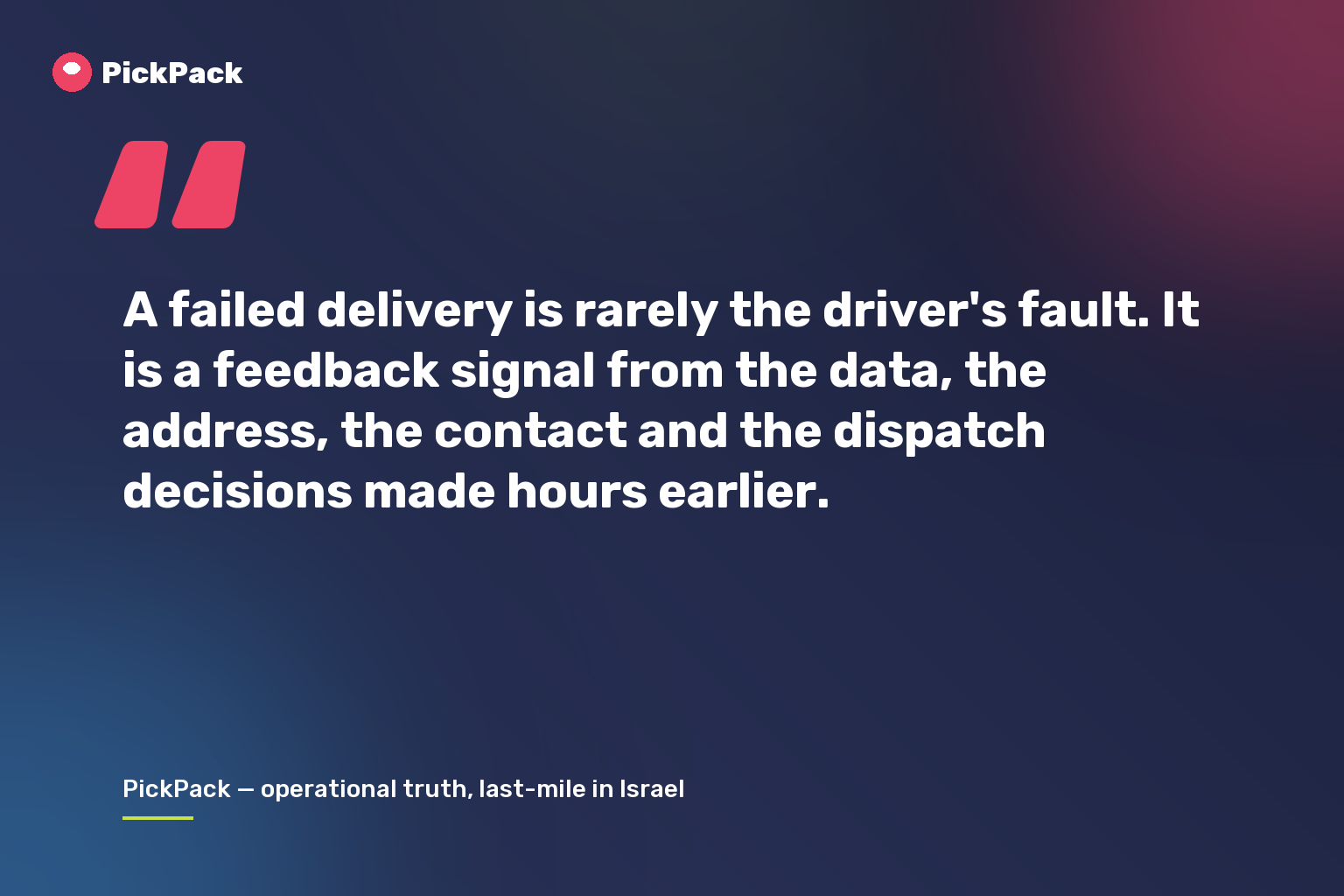
A failed delivery is rarely just a driver problem. In most operations it is the visible outcome of several weak signals: no reliable ETA, low address confidence, unclear handoff evidence, and no real-time intervention when a task starts drifting.
That is why teams that focus only on route planning still end up paying for reattempts. To reduce failed deliveries, you need the customer view, the driver workflow, and the dispatcher exception view to work together.
Quick summary
- Failed deliveries are usually the result of a weak process chain, not a single field mistake.
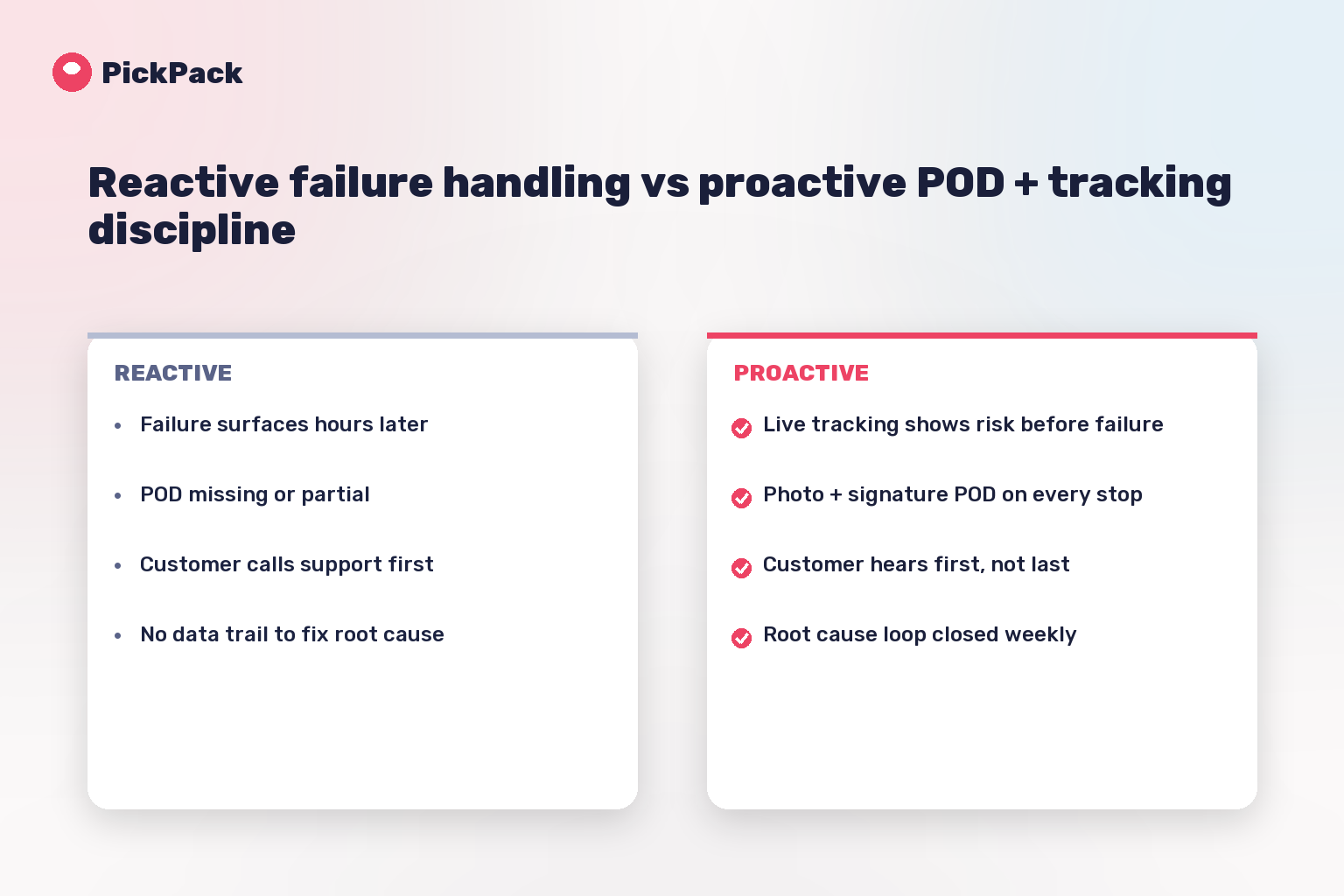
- Proof of delivery should explain what happened, not only confirm presence.
- Live tracking matters because it gives dispatch a chance to rescue the stop before it becomes a reattempt.
- The strongest operations define reason codes, rescue paths, and service-type-specific completion rules.

Why proof of delivery is part of service quality
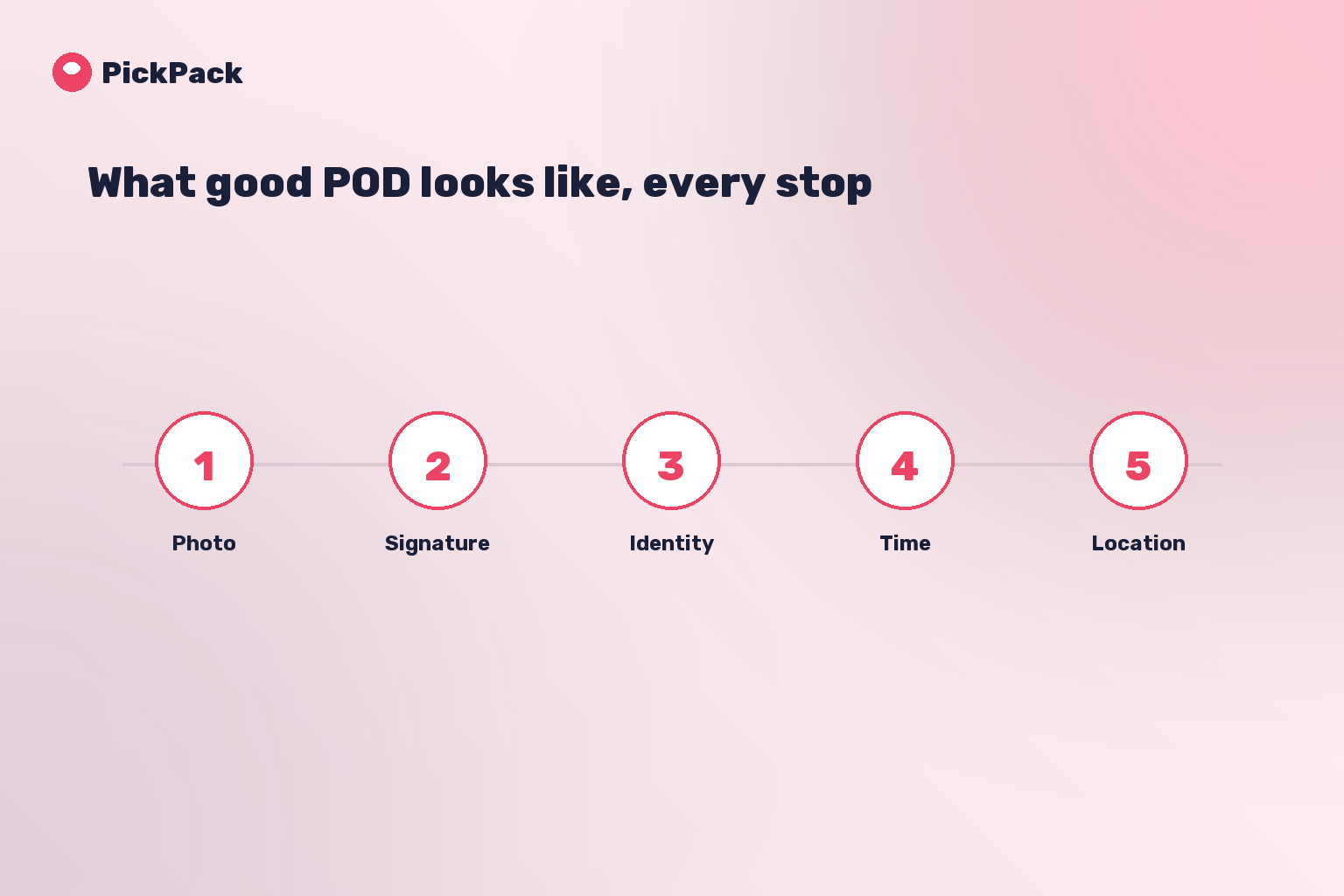
Onfleet’s March 12, 2026 proof-of-delivery support update is a useful reminder that completion is not binary. A task can require photos, signatures, age checks, and clearly documented completion status. That matters because a delivery record should make the next operational decision easier, not harder.
In the real world, “customer unavailable,” “security desk refused handoff,” “left in an approved drop location,” and “wrong address” are not interchangeable outcomes. If every one of them lands in the same red bucket, the operation cannot learn or recover quickly.
Where failed deliveries actually begin
- Weak ETA communication: the customer is not available when the stop arrives.
- Poor handoff evidence: support cannot tell whether the driver reached the site or not.
- Unstructured failure reasons: the data is too vague to drive correction.
- No exception board: dispatch sees the problem too late to save the day.
- One-size-fits-all completion logic: pharmacy, grocery, parcel, and retail stops do not need the same closeout policy.
Five controls that reduce reattempts
- Actionable ETA messages before arrival.
- Service-type-specific POD rules for photo, signature, age verification, or documented failure.
- Reason codes that describe the operational reality instead of a generic “failed.”
- A live exception view so dispatch can decide whether to rescue, reroute, or reschedule.
- A same-day rescue policy with clear ownership.
The foundation is still the combination of route planning, address quality, and day-of execution control. Without all three, failure simply moves from the field to customer support.
Where PickPack fits
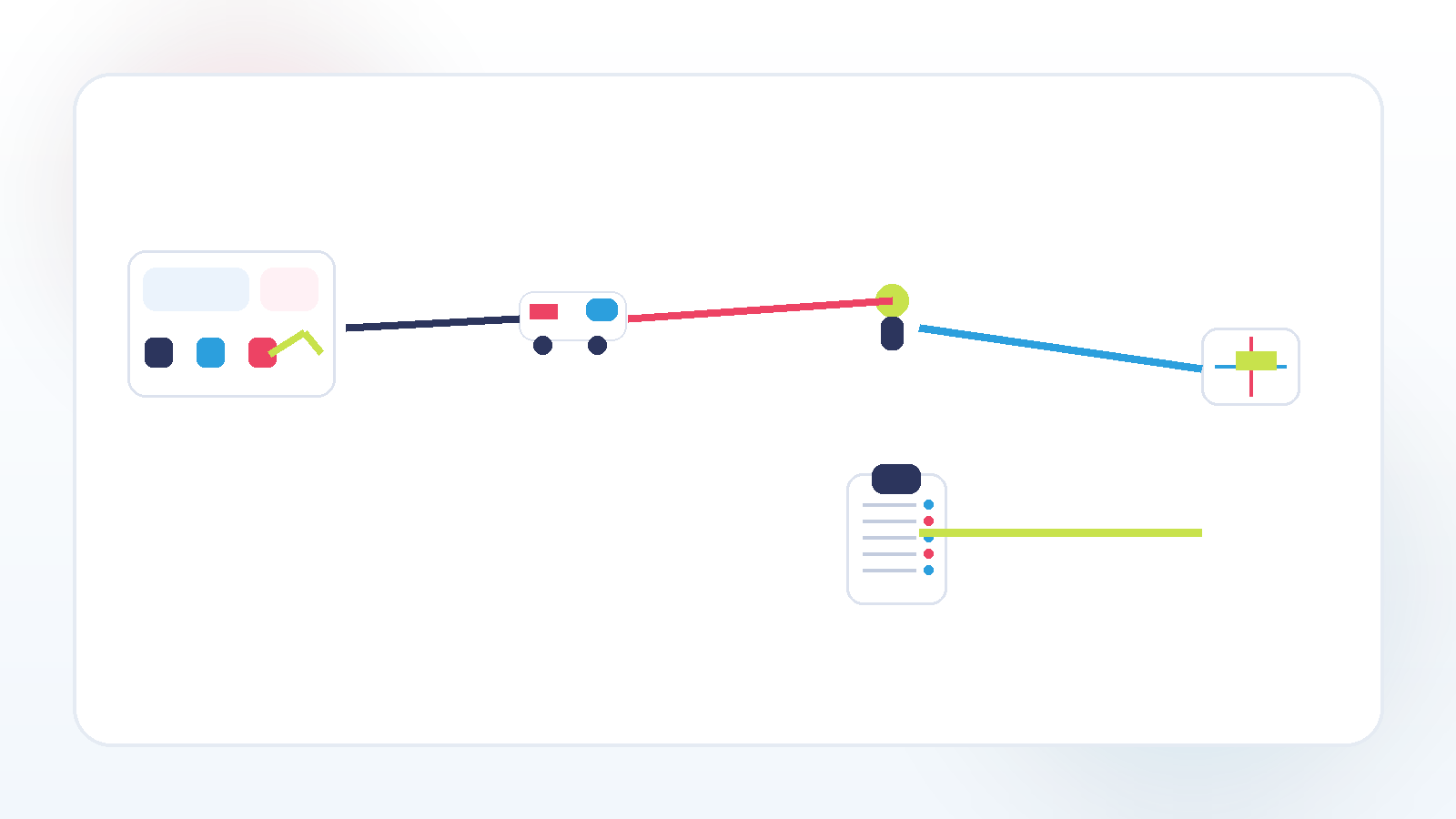
PickPack matters here because it treats failed deliveries as an orchestration problem, not only a navigation problem. ETA messaging, live tracking, POD, status logic, and exception handling all sit in the same operational layer.
That is visible in approved customer proof as well. According to PickPack’s internal approved benchmarks, Rekach Pharmaceuticals reached 100% chain-of-custody compliance, zero address-error returns, and 2-hour urgent delivery capability. That is what disciplined execution looks like.
Bottom line: reducing failed deliveries requires tighter customer communication, better handoff evidence, and faster intervention when the stop starts going wrong.
Related reading
FAQ
A late stop can still succeed. A failed delivery is a stop that did not close as planned and now requires recovery, rescheduling, or return handling.
Because documentation without ETA logic and exception handling only tells you what happened after the damage is done.
Start with completion rules, failure reasons, and a live exception view that dispatch can actually act on.